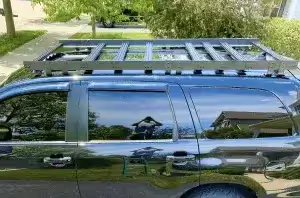
How to Stop Roof Rack Wind Noise and Whistling: 7 Proven Fixes
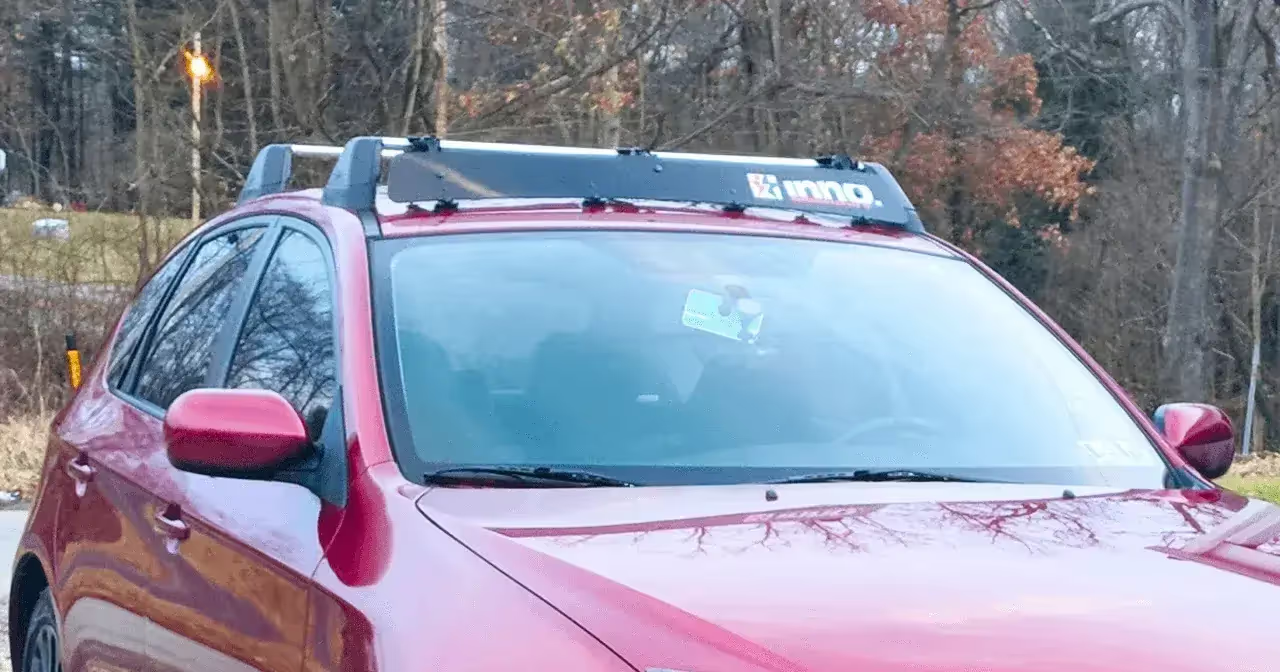
Let me save you some time: that whistling sound coming from your roof rack is almost never a defective product. I've been installing and testing rack systems since before most of today's "aero" bars even existed, and nine times out of ten, the noise comes down to how the rack is set up — not what you bought.
I get emails about this constantly. Someone drops $400-plus on a rack system (and yes, there are real reasons roof racks cost what they do), gets it mounted, hits the highway, and immediately hears that maddening hum. First instinct is to blame the rack. Usually the wrong instinct.
I've been updating this guide since I first wrote it, and the 2026 version reflects what I'm actually seeing and hearing on current hardware. Some of the old recommendations — like chasing down Whispbar replacements or trusting the original AeroBlade design — just aren't where I'd point people anymore. The fixes below are what I'd walk you through if you were standing in my garage.
7 Proven Ways to Kill Roof Rack Wind Noise
I'm listing these in the order I'd actually troubleshoot. Start at the top. Most people never need to get past fix three or four.
1. Shift Your Crossbar Position
This is the single most overlooked fix, and it's free. Every crossbar has a resonance sweet spot — a position where airflow hits it just right and sets up that whistle. Move the bar two or three centimeters forward or backward along the rail, and you change the airflow pattern enough to kill it.
I learned this the hard way back in 2009 on a Subaru Outback with factory rails. Spent an entire Saturday convinced the bars were defective. Moved them about an inch forward on a hunch. Dead silent at 70 mph. I felt like an idiot and a genius at the same time.
Here's how I test it: pick a stretch of highway where you can hold a consistent speed — 65 to 75 mph is where most whistling lives. Note the noise. Pull over, shift the bars slightly, and run the same stretch again. You'll usually find the quiet spot within two or three tries.
2. Re-Torque Every Single Mount Point
Loose hardware vibrates. Vibration makes noise. This is basic mechanics, but I'm still amazed how often it's the culprit.
After 20-plus years of installs, here's what I've seen: people tighten everything during the initial setup, drive for a few weeks, and never touch it again. Thermal cycling, road vibration, and load changes all work fasteners loose over time. I re-torque my mounts every few months, and I always re-check after the first highway drive on a new install.
Torque to the manufacturer's spec. If you don't have a spec, snug-plus-a-quarter-turn is my rule of thumb for most clamp-style feet. Don't gorilla it — you'll crack plastic components or strip threads. I've seen both happen more times than I can count.
3. Twist Your Straps Before You Drive
Flat straps are noisy straps. Period. A loose, flat strap at highway speed acts like a reed in a woodwind instrument. It vibrates at a frequency that'll drive you crazy within ten minutes.
The fix takes five seconds: put one or two twists in each strap before you cinch it down. This breaks up the flat surface profile and eliminates the harmonic vibration. I do this automatically now — it's just muscle memory after tying down hundreds of loads.
This applies to cam straps, ratchet straps, whatever you're using. If it's flat and it's in the wind, twist it.
4. Add a Wind Fairing
A fairing is basically a wedge-shaped deflector that mounts to your front crossbar and redirects airflow up and over the rack. They work. Not always, but often enough that I consider them a legitimate tool in the noise-fighting kit.
Where fairings really shine: square-profile crossbars and setups where you've got accessories mounted that create a blunt leading edge. If your crossbar profile is already rounded or teardrop-shaped, a fairing might not add much — the bar is already doing that job.
I ran a Thule fairing on a set of square bars for about three years on my old 4Runner. Dropped the noise noticeably — maybe 40 percent reduction at highway speed. Not silent, but the difference between "annoying" and "I can live with this." Worth the $80 or so they typically run.
One thing I'll say: don't buy a fairing as a band-aid for a bad setup. Fix the fundamentals first — torque, position, straps. Then add a fairing if you're still getting turbulence noise.
5. Remove What You're Not Using
This is the advice nobody wants to hear. You spent good money on that bike tray or those kayak J-cradles, and taking them on and off feels like a hassle. I get it. But every piece of hardware sitting up there in the wind is generating drag and potential noise.
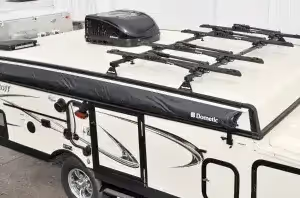
Empty bike trays with their upright arms are some of the worst offenders I've encountered. Same with ski racks left open and unused cargo basket sidewalls. If you're not hauling something that day, strip it down to bare bars.
I keep my accessories organized in the garage so the swap takes ten minutes, tops. It also helps your fuel economy — and if you're running a cargo carrier setup, less permanent hardware up top means a cleaner, quieter base to work from.
6. Keep Your Load Low and Tight
Physics doesn't care about your packing preferences. The higher your load sits above the roofline, the more turbulent air you're creating, and the more noise you'll hear inside the cabin.
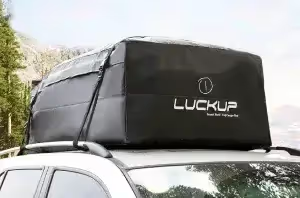
I pack cargo bags and boxes as flat as possible, centered between the crossbars. Anything tall or irregularly shaped goes in the middle of the stack, not on the edges where it catches crosswind. And I cinch everything tight — a load that shifts or flutters is a load that makes noise.
On a road trip last spring — Colorado to Utah, mostly I-70 — I had a buddy following me in his truck. He told me later he could see my soft cargo bag "breathing" at speed because I hadn't strapped it tight enough. That breathing was exactly what I was hearing inside the cab as a low-frequency throb. Pulled over, added two more strap points, and it went quiet. Lesson re-learned.
7. Upgrade to Modern Aero Bars
If you've tried everything above and you're still fighting noise, or if you drive with your rack on daily, this is where I'd put your money.
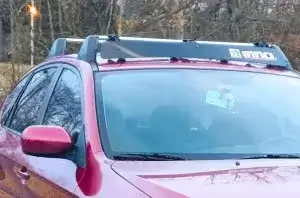
Aero bar technology in 2026 is genuinely good. The engineering has come a long way from even five years ago. Modern bars use wind-tunnel-tested profiles, internal channels for cleaner accessory mounting, and better damping materials. The difference between a current aero bar and the square tubes I was installing in the early 2000s is night and day.
The two systems I trust and actively recommend right now:
- Thule WingBar Evo — Excellent aero profile, wide accessory compatibility, and Thule's quality control has been consistently solid. I've had a set on my current daily driver for over a year. Virtually silent at any legal speed. If you want to compare Thule's full roof storage lineup, that's a good starting point.
- Yakima JetStream — Yakima's answer to the aero bar race. Great profile, good T-slot system, competitive pricing. I've installed these on probably a dozen vehicles for friends and readers, and the feedback has been consistently positive.
You'll notice I'm not mentioning some older names. Whispbar got absorbed and the original line isn't what it was. The early Thule AeroBlade bars were fine for their era, but the WingBar Evo is a clear step forward. I've seen brands come and go in this industry, and I'm not going to recommend something I wouldn't put on my own vehicle just because it has name recognition.
One trend I'm paying attention to in 2026: more factory-integrated rack systems from automakers are using aero profiles from the start, especially on EVs where drag directly impacts range. That's pushing the aftermarket brands to keep improving, which is good for all of us. The gap between a "quiet" bar and a "noisy" bar has never been wider — meaning if you're still running old square tubes, the upgrade delta is significant.
My Quick Diagnostic Order
When someone asks me to troubleshoot their noisy rack, this is the exact sequence I follow:
- Step 1: Check torque on every mount point and twist any flat straps.
- Step 2: Shift crossbar position and re-test at highway speed.
- Step 3: Remove any unused accessories or hardware.
- Step 4: Add a fairing if the bar profile warrants it.
- Step 5: Upgrade to aero bars if noise persists and you drive with the rack daily.
Most people are done by step two or three. I'd say fewer than one in ten actually needs new bars to solve a whistle problem. The rest is just setup discipline.
Bottom Line
Roof rack wind noise is a solvable problem. I've been fixing these setups since before "aero bar" was a marketing term anyone used, and the fundamentals haven't changed: tight hardware, smart positioning, and clean aerodynamics beat throwing money at the problem almost every time.
Run through the seven fixes above in order. Be methodical. Test at a consistent speed on the same stretch of road so you're comparing apples to apples. You'll almost certainly find your fix before you reach the bottom of the list.
And if you do end up upgrading your bars — because sometimes that really is the right call — at least you'll know you've eliminated every other variable first. That's how you make a smart purchase instead of an expensive guess.
Got a setup that's still giving you trouble after all this? Drop a comment. I've probably seen your exact rack-and-vehicle combo before.