Thule doesn't make cheap products. They also don't make bad products. In twenty-plus years of installing and testing rack systems, I've found their failure rate to be almost zero on the cargo storage side. Mounts, fit kits, hardware — all solid.
The challenge with Thule isn't quality. It's figuring out which product you actually need from a lineup that's gotten huge. Boxes, baskets, bags — they've got options at every price point, and the differences between models aren't always obvious from the product pages.
I've had hands-on time with all four of the products in this comparison. Here's the honest breakdown.
Key Takeaway
Choose a cargo box if you need weather protection, security, and quiet highway driving. Choose a basket if you carry oversized or odd-shaped gear like coolers, firewood, and bins. If you can only own one, a box covers the widest range of hauling needs for most people.
The Box vs. Basket Decision
Before comparing specific models, you need to answer one question: do you need an enclosed box or an open basket?
Enclosed cargo box if:
- You carry items that can't get wet — luggage, clothing, electronics, sleeping bags
- You want to lock your gear and walk away
- Aerodynamics and fuel economy matter (boxes are far more aero than loaded baskets)
- You value a clean, quiet highway ride
Open basket if:
- You carry odd-shaped, oversized, or dirty gear — coolers, firewood, bins, wet equipment
- You want flexibility in what you can carry (nothing has to "fit inside")
- You need a platform for lashing down mixed loads
- Price matters — baskets cost roughly half what boxes cost
I own both. The box goes on for road trips. The basket goes on for camping and outdoor weekends. If I could only have one, I'd pick the box. Most of my hauling involves stuff I don't want rained on.
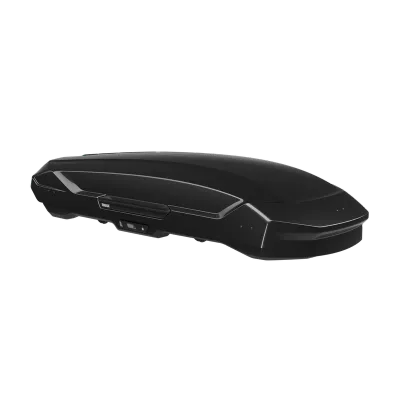
Thule Motion 3 XL — The Premium Box
The Motion 3 is Thule's flagship. It replaced the Motion XT in 2024, and the upgrades are meaningful, not cosmetic.
The lid opens with one hand. I know that sounds like a small thing, but if you've ever fought a cargo box lid in a parking lot while holding a bag with the other hand, you understand. The PowerClick mounting system also makes installation genuinely tool-free. I timed it: 8 minutes from pulling the box out of my garage to having it secured on the crossbars. That's with practice, but a first-timer could do it in 15.
What I Like
- Dual-side opening. Both driver and passenger side. Access from either side of the vehicle. Sounds minor until you're parked against a wall on the box's only opening side.
- 16.2 cubic feet (XL). That's genuine, usable space. I fit two large rolling duffels, a soft cooler, and two sleeping bags. With room left.
- Aerodynamic profile. The tapered nose and textured lid surface actually reduce wind noise. It's not silent — no rooftop box is — but it's noticeably quieter than the boxy Force series.
- SlideLock system. The box can't close unless it's locked. You'll never accidentally leave it unlocked.
What I Don't Like
- Price. The XL runs around $750 in 2026. That's a lot of money for a plastic box on your roof. Though as I've written before, there are real reasons quality roof gear costs what it does.
- Height. The Motion 3's low-profile design is great for aero but limits the height of what fits inside. Tall boots, bulky jackets, and stacked items need to fit under about 16 inches of internal height at the tallest point.
- Weight. 46 lbs empty. It's not light. Getting it onto crossbars by yourself requires some technique. I rest one end on the rear bar first, then swing the front end up.
Pro Tip
When mounting a heavy cargo box solo, rest one end on the rear crossbar first, then swing the front end up into position. This pivot technique eliminates the need to dead-lift the full 40-50 lbs overhead and works with any brand of box.
Best For
Road trippers, ski trips, families who need overflow luggage space. If you do 4+ long trips a year and want the nicest box Thule makes, this is it.
Premium Pick
Thule Motion 3 XL
- Type: Roof box
- Volume: 16.2 cu ft
- Weight: 44 lbs
- Capacity: 165 lbs
- Price: ~$1,150
Pros
- Dual-side opening — access from either side of the vehicle
- Best aerodynamic profile — noticeably quieter than boxy designs
- SlideLock system prevents accidental unlocking
- PowerClick tool-free mounting in ~8 minutes
Cons
- Premium price at ~$750
- Low-profile limits internal height to ~16 inches
- 46 lbs empty — requires technique to mount solo
Check Price on Amazon
Price may vary.
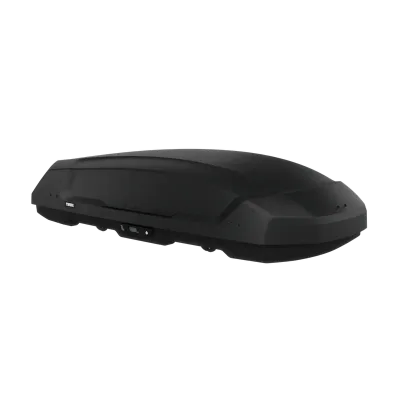
Thule Force 3 XT L — The Value Box
The Force 3 is the Motion 3's practical sibling. Less refined, less aerodynamic, but also less expensive and arguably more usable for certain loads.
Where the Motion 3 is sculpted and low, the Force 3 is boxy and tall. That boxiness costs you at the pump and on the noise meter, but it gains internal height. You can stack more inside a Force 3 than a Motion 3 of the same length. If you're packing coolers and bins, the straight interior walls of the Force 3 waste less space than the Motion 3's curved interior.
What I Like
- Price. Around $500-550 for the L size. That's $200 less than a comparable Motion 3.
- Internal volume. 16 cubic feet with squarer dimensions. More practical packing space per cubic foot.
- Durability. The simpler design has fewer moving parts. The lid mechanism is basic but solid.
- Same PowerClick mounting as the Motion 3. Quick install, secure fit.
What I Don't Like
- Wind noise. The blunt profile generates more turbulence. At 70 mph, you'll hear it in the cabin. A crossbar fairing helps.
- Single-side opening only on most models. Check the specific variant before buying.
- Aesthetics. It looks like what it is — a utility box. The Motion 3 looks like it was designed. The Force 3 looks like it was engineered. Some people care about that distinction. I'm not one of them.
Best For
Budget-conscious buyers who want a solid enclosed cargo box without paying flagship prices. Buyers who pack rigid bins and coolers that benefit from the boxy interior shape.
Best Value Box
Thule Force 3 L
- Type: Roof box
- Volume: 16 cu ft
- Weight: 38 lbs
- Price: ~$880
Pros
- $200 less than a comparable Motion 3
- Squarer interior dimensions — more practical packing space per cubic foot
- Same PowerClick tool-free mounting as Motion 3
- Simpler design with fewer moving parts — solid durability
Cons
- Blunt profile generates more wind noise at 70 mph
- Single-side opening on most models
- Utility appearance — functional over stylish
Check Price on Amazon
Price may vary.
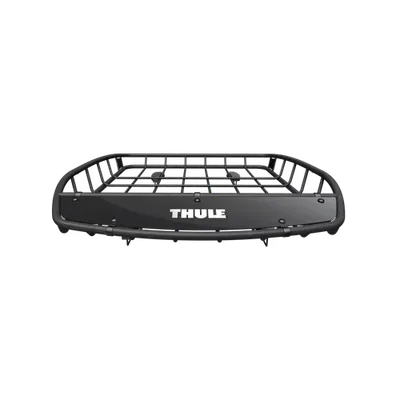
Thule Canyon XT — The Basket
The Canyon XT is Thule's steel-mesh roof basket, and it's been a staple in their lineup for years. The current version is refined but fundamentally unchanged from the concept: an open steel platform with raised edges on your roof.
I've had a Canyon XT on and off my vehicles since 2019. It's the single most versatile rooftop cargo solution I own. Nothing else handles the range of loads a basket does.
What I Like
- Total flexibility. Throw a waterproof bag in it for soft goods. Strap down a cooler. Lash lumber. Toss in firewood bundles. Bolt on light bars, awning mounts, or accessory trays. No other cargo solution does all of this.
- Price. Around $350. Less than any Thule cargo box and vastly more versatile.
- Build quality. Heavy-gauge steel with a durable powder coat. The mesh floor has drain holes and is stiff enough to support concentrated loads without bending. The extension piece lets you add length for longer items.
- Permanent mount option. I leave mine on year-round with a low fairing up front. It's always ready.
What I Don't Like
- Wind noise. An empty basket is a noise machine. The crossbar fairing (sold separately, of course) is mandatory unless you enjoy highway-speed turbulence rumble. Even with the fairing, it's louder than a box.
- Weather exposure. Everything in it gets rained on, snowed on, and bug-splattered. You need a cargo bag or net for anything weather-sensitive.
- Weight. 24 lbs for the basket alone. Add the fairing, extension, and cargo net and you're at 30+ lbs before loading any gear. That eats into your roof load limit.
- Theft. Open basket means visible contents. No lock solution unless you use a locking cargo net or bag, and those are deterrents, not security.
Best For
Overlanders, campers, and anyone who carries gear that won't fit in a box. If your typical load includes coolers, camp chairs, firewood, and bins, the Canyon XT is the right choice.
Most Versatile
Thule Canyon XT
- Type: Roof basket
- Weight: 29 lbs
- Material: Heavy-gauge steel, powder-coated
- Price: ~$500
Pros
- Total cargo flexibility — bags, coolers, lumber, firewood, accessories
- Less expensive than any Thule cargo box
- Heavy-gauge steel with durable powder coat
- Can be left on year-round with a low fairing
Cons
- Empty basket is a noise machine — fairing is mandatory
- Everything inside gets rained on — need a cargo bag for weather-sensitive items
- No security — visible, accessible contents
Check Price on Amazon
Price may vary.
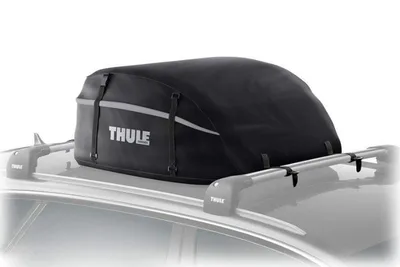
Thule Outbound Cargo Bag — The Portable Option
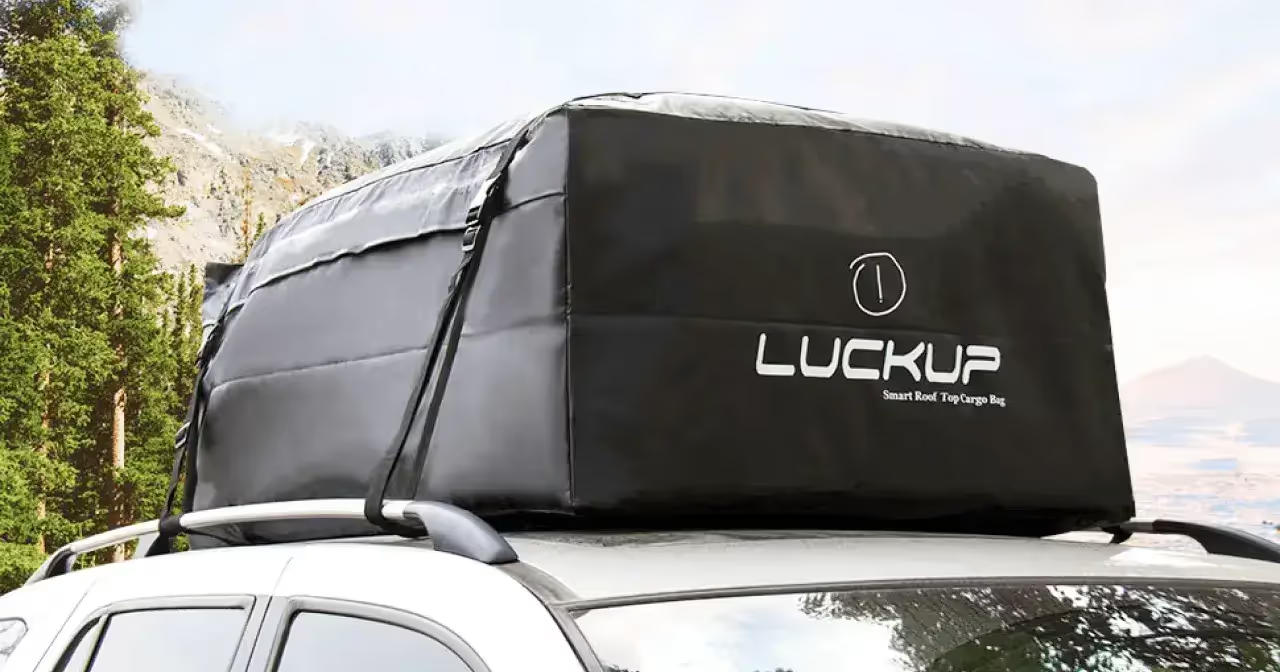
The Outbound is a soft cargo bag that sits on your crossbars (or directly on your roof, though I recommend it on bars). It's Thule's entry-level rooftop cargo solution, and it serves a specific purpose: seasonal overflow for people who don't want a permanent box or basket.
What I Like
- Price. Under $150. The cheapest Thule roof cargo option by a wide margin.
- Storage. When empty, it folds down to the size of a sleeping bag. Try that with a rigid box.
- Simplicity. Straps to crossbars. No mounting hardware. Five minutes to install.
- Decent weather protection. The welded seams hold up in rain. Not perfect in sustained downpours, but adequate for normal conditions.
What I Don't Like
- Capacity. 13 cubic feet for the large size. Less than the rigid boxes and harder to pack efficiently because the bag shape changes based on contents.
- Aero. It's a nylon bag on your roof. Aerodynamics are whatever shape your gear makes it. Wind noise varies from tolerable to obnoxious depending on how it's loaded.
- No security. No lock. Visible contents through the fabric profile. It's a soft bag.
- Durability ceiling. It's well-made for what it is, but it won't survive as many seasons of hard use as a rigid box. UV degradation, zipper wear, and fabric abrasion are real over time.
Best For
Occasional users who need rooftop cargo space a few times a year. Travelers who want something that packs into a suitcase for rental car use. Budget-conscious buyers who already have crossbars and want to maximize them cheaply. Also a solid option for people exploring rooftop cargo for the first time.
Budget Pick
Thule Outbound Cargo Bag
- Type: Soft rooftop cargo bag
- Volume: 13 cu ft
- Weight: 5 lbs
- Price: ~$180
Pros
- Cheapest Thule roof cargo option at under $150
- Folds down to sleeping-bag size when empty
- Five-minute installation — straps to crossbars, no hardware
- Welded seams hold up in rain
Cons
- Less capacity at 13 cu ft — harder to pack efficiently
- No lock — no security
- Aerodynamics depend on how you load it
- UV degradation and zipper wear limit long-term durability
Check Price on Amazon
Price may vary.
Quick Comparison Table
| Feature |
Thule Motion 3 XL |
Thule Force 3 L |
Thule Canyon XT |
Thule Outbound Cargo Bag |
| Type |
Roof box |
Roof box |
Roof basket |
Soft cargo bag |
| Volume |
16.2 cu ft |
16 cu ft |
Open |
13 cu ft |
| Weight |
44 lbs |
38 lbs |
29 lbs |
5 lbs |
| Price |
~$1,150 |
~$880 |
~$500 |
~$180 |
| Lockable |
Yes |
Yes |
No |
No |
| Dual-Side Opening |
Yes |
No |
N/A |
N/A |
| Best For |
Road trips, premium experience |
Budget road trips, boxy loads |
Camping, overlanding, versatility |
Occasional use, portability |
There's no single "best" Thule roof storage product. There's the best one for how you use it.
Road trips and family travel: Motion 3. Budget road trips: Force 3. Camping and outdoor versatility: Canyon XT. Occasional use and portability: Outbound bag.
If you're trying to decide between any of these and a hitch-mounted alternative, I covered that side of the equation in our hitch cargo carrier review. Many people end up with both a rooftop solution and a hitch carrier for maximum flexibility. That's where I've landed after years of experimenting.
The upfront price stings, but the per-year cost works out to almost nothing if you keep it long enough.
Whatever you pick from Thule's lineup, buy once. These products last. I've got Thule gear from over a decade ago still in regular use. The upfront price stings, but the per-year cost works out to almost nothing if you keep it long enough.
---