Kayak Racks for Jeeps in 2026: The Ultimate Guide
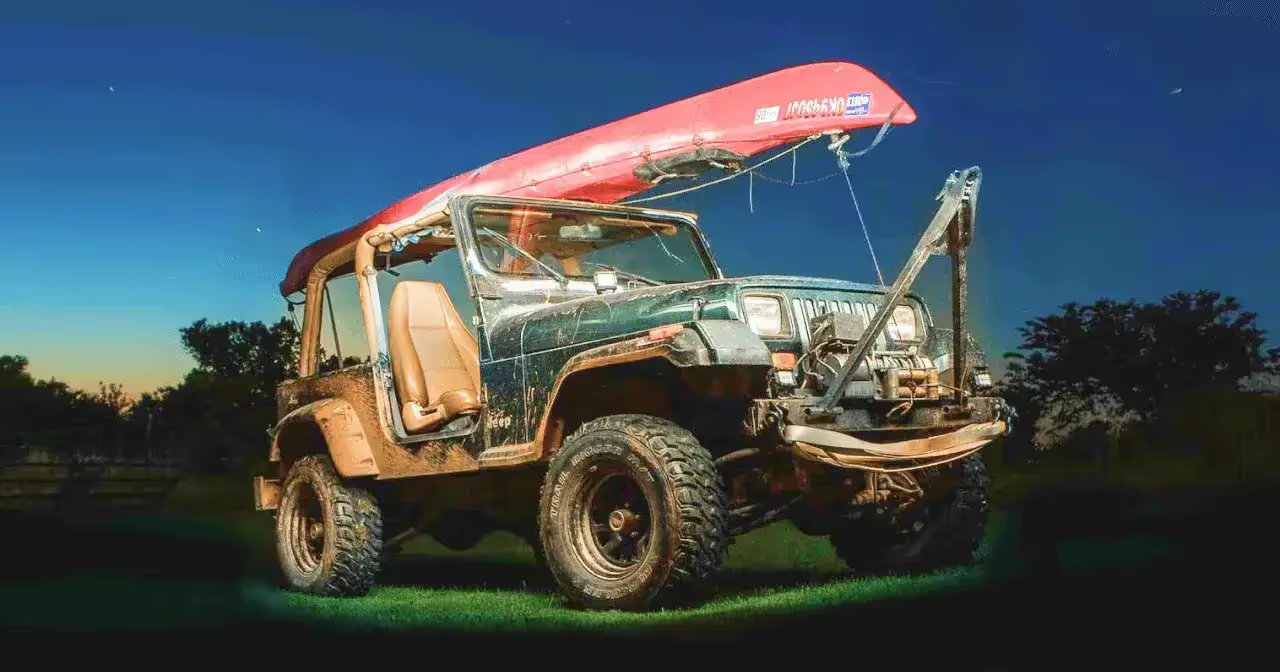
I'll never forget the look on a student's face when she showed up to my intermediate whitewater course in a brand-new Jeep Wrangler with a kayak just sort of... wedged inside. She'd folded the back seats down, shoved a 10-foot recreational kayak through the tailgate, and driven forty minutes with the stern sticking out past the bumper and a red bandana tied to it. Points for creativity and determination, but we needed to have a conversation about better options.
Jeeps are incredible vehicles for getting to remote put-ins — the kind of rocky, rutted forest service roads that would eat a sedan alive. But they present some genuinely unique challenges when it comes to carrying kayaks. The soft tops flex, the hard tops have weight limits that might surprise you, the doorless/topless configurations that make Jeeps so fun in summer make traditional rack mounting complicated, and the overall height of a Wrangler or Gladiator means you're loading a kayak onto a roof that's already well over six feet off the ground. None of these problems are unsolvable, but you need to know what you're dealing with before you buy a rack.
The Jeep Problem: Why Standard Racks Don't Always Work
Most kayak rack systems are designed for vehicles with permanent, rigid roofs and either factory crossbars or aftermarket crossbar mounts. Jeeps — particularly Wranglers and the newer Gladiators — break those assumptions in several ways.
Soft Top Wranglers
A soft top is essentially a reinforced fabric roof stretched over a folding frame. It's not designed to support significant weight. Most soft top frames can handle 50-75 pounds at best, and that's the frame's rating — the fabric between the frame members can't support anything at all. A single kayak weighs 40-80 pounds depending on the type, and a rack system adds another 10-20 pounds. You're right at or over the limit with a single boat, and there's zero margin for error.
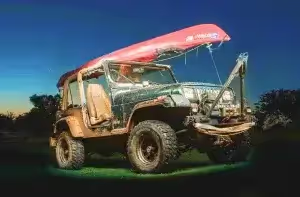
The practical solution for soft-top Jeeps is to avoid the roof entirely. That means a hitch-mounted carrier, a utility-style crossbar system that attaches to the roll cage or sport bars rather than the roof, or an interior carrier if your kayak is short enough. I've seen some clever DIY solutions using the Jeep's existing sport bar mounts, and several aftermarket companies now make crossbar kits specifically designed for soft-top Wranglers that bolt to the roll cage.
Hard Top Wranglers
A hard top gives you a rigid mounting surface, which is a big improvement, but the weight limits are still relatively low compared to a typical SUV roof. Jeep rates the JL Wrangler hardtop at about 150 pounds of dynamic load (while driving). That's enough for one kayak and a rack system in most cases, but it's tight for two boats, and you need to factor in crossbar weight. The 2024-2026 JL hardtops have gotten slightly stronger, but you should still check the specific rating for your model year.
The good news is that several companies make hardtop-specific crossbar systems that distribute the load across the widest possible area. Rhino-Rack, Yakima, and Thule all have Jeep-specific fitment kits that work well. Just make sure you're buying the right kit for your generation — JK (2007-2018) and JL (2018-present) have different mounting points.
No Top at All
One of the best things about a Jeep is pulling the top off on a gorgeous summer day. One of the worst things about a topless Jeep is that you can't mount a kayak rack to a roof that doesn't exist. If you're a doors-off, top-off summer paddler, your options are a hitch carrier, a bed-mounted rack (Gladiator only), or mounting crossbars to the sport bars/roll cage that remain when the top comes off.
I actually love the sport bar crossbar approach for topless Jeeps. Companies like Barricade and GPCA make crossbar kits that bolt directly to the Wrangler's sport bars, giving you a mounting surface for J-racks or saddle carriers without needing any kind of top. The capacity is typically limited to one kayak at around 50-60 pounds, but for a single recreational or whitewater boat, it works beautifully.
Best Rack Options for Jeeps in 2026
For Hard Top Wranglers and Gladiators: Roof-Mounted Systems
If you've got a hard top and you want to carry your kayak on the roof, start with a good crossbar system designed for your specific Jeep. The Rhino-Rack Vortex RLT600 and the Yakima JetStream with Jeep-specific towers are both excellent choices. They mount to the factory hardtop mounting points and provide a solid platform for any standard kayak carrier.
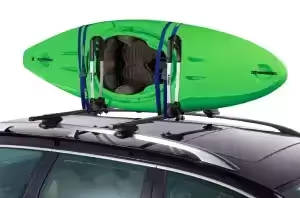
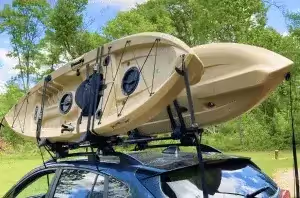
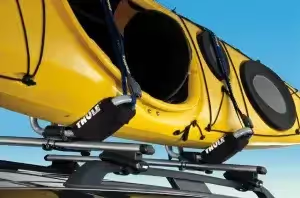
Once you've got crossbars, I'd recommend J-style carriers for most Jeep owners. The angled loading position keeps the kayak lower on the rack, which helps with the already-tall Jeep profile, and J-racks let you keep half the roof free for other gear. Jeep people tend to be gear people — I see a lot of Wranglers running a J-rack on one side and a cargo box on the other, which is a great setup for a weekend of paddling and camping.
For Soft Top and Topless Configurations: Hitch Carriers
A hitch-mounted carrier is the most versatile option for Jeep owners because it works regardless of what's happening with your top. Top on, top off, soft top, hard top — doesn't matter. The kayak rides behind the vehicle at bumper height, the weight is on the hitch instead of the roof, and you can remove the carrier in minutes when you don't need it.
Most Wranglers come with a factory 2-inch hitch receiver or have mounting points for one. If yours doesn't have a hitch yet, aftermarket hitches for Wranglers are widely available and installation is straightforward — most shops do it in under an hour. Given how many accessories Jeep owners tend to mount to their hitches (bike racks, cargo carriers, spare tire carriers), having one installed is a good investment regardless.
For Gladiators: Bed-Mounted Options
The Gladiator's truck bed opens up options that Wrangler owners don't have. A set of bed-mounted crossbars — like the Yakima OutPost HD or the Thule Xsporter Pro — gives you a dedicated kayak mounting platform that's completely independent of the cab roof. The bed is structurally stronger than the hardtop, the mounting height is lower than the cab roof, and you can still use your bed for gear with the kayak riding overhead.
I've been seeing more Gladiator owners at put-ins lately, and the ones who've figured out the bed-mounted crossbar setup are universally happy with it. Loading is easier because the bed sides give you a place to rest the kayak while you position it, and the shorter loading height means less overhead lifting.
Loading a Kayak onto a Tall Jeep
Even with the right rack, getting a kayak onto a Jeep roof is a physical challenge. A Wrangler's roof is about 73 inches off the ground — add crossbars and a J-rack and you're trying to lift a boat to about 80 inches. That's over six and a half feet, which means most people need to lift the kayak over their head.
Here are the techniques I teach my students for loading onto tall vehicles.
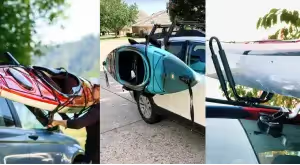
- The rear-load method: Stand at the back of the Jeep, lift the bow onto the rear crossbar, then walk around to the side and push the kayak forward into the rack. This lets you use the crossbar as a pivot point instead of dead-lifting the whole boat.
- The towel method: Lay a towel on the rear of the roof to protect the paint, rest the kayak bow on the towel, then slide the boat forward. Same concept as the rear-load, but the towel prevents scratches.
- Use a step: A small folding step stool at the side of the Jeep brings the rack down to a comfortable loading height. I keep one in my Jeep specifically for this purpose. It seems silly until you try it — then it seems genius.
- Consider a lift-assist rack: If overhead loading is a deal-breaker, a lift-assist system like the Thule Hullavator brings the kayak cradle down to waist height for loading, then lifts it up to the roof with gas-assist struts. They're expensive, but for Jeep owners who paddle frequently and don't want to wrestle with overhead loading every time, they're worth every penny.
Weight Limits: Know Your Numbers
This is where Jeep owners get into trouble more than anything else. Here are the approximate dynamic roof weight limits for current Jeeps — but always verify against your specific model year and configuration in your owner's manual.
- JL Wrangler Hard Top: ~150 lbs dynamic
- JL Wrangler Soft Top: ~50-75 lbs (frame only, nothing on fabric panels)
- JT Gladiator Hard Top (cab roof): ~150 lbs
- JT Gladiator Bed: Varies by bed rack system, typically 300-600 lbs
Remember, these are dynamic ratings — the weight the roof can support while driving over bumps at speed. Static ratings (parked) are higher, but you shouldn't load to static capacity because the forces change dramatically once you start moving.
Jeep-Specific Gotchas I've Learned the Hard Way
Wind. Jeeps are tall, boxy, and not particularly aerodynamic to begin with. Add a kayak on top and you've got a significant sail area. Crosswinds will push you around more than you expect, especially on highway bridges and overpasses. Slow down in wind and keep both hands on the wheel.
Freedom panels. If your hardtop has removable freedom panels (the front roof sections), make sure your crossbar mounting points don't interfere with panel removal. Some crossbar kits mount to the same area and prevent you from pulling the panels off. This might not matter if you always drive with the top on, but if you like pulling those panels for fresh air, check compatibility before you buy.
Antenna. The Wrangler's antenna is tall and positioned where it can interfere with kayak loading. Some paddlers remove it or replace it with a stubby antenna. I'd recommend the stubby antenna swap regardless — they work just as well for radio reception and they won't snag your boat during loading.
Jeeps and kayaking go together naturally — both are about getting outdoors, exploring, and not being afraid to take the road less traveled. The rack situation just requires a little more thought than it does with a typical SUV or sedan. Know your top configuration, know your weight limits, and choose a system that works with your Jeep's specific setup rather than fighting against it.
If I had to give one piece of advice to Jeep-owning paddlers, it would be this: don't cheap out on the crossbar system. The crossbars are the foundation that everything else mounts to, and Jeep-specific crossbars from reputable manufacturers are engineered to work with the unique mounting points and weight limitations of your vehicle. Get those right, and the rest of the rack equation is straightforward. Get those wrong, and you'll be dealing with rattles, wobble, and anxiety every time you hit the highway.