Quick answer
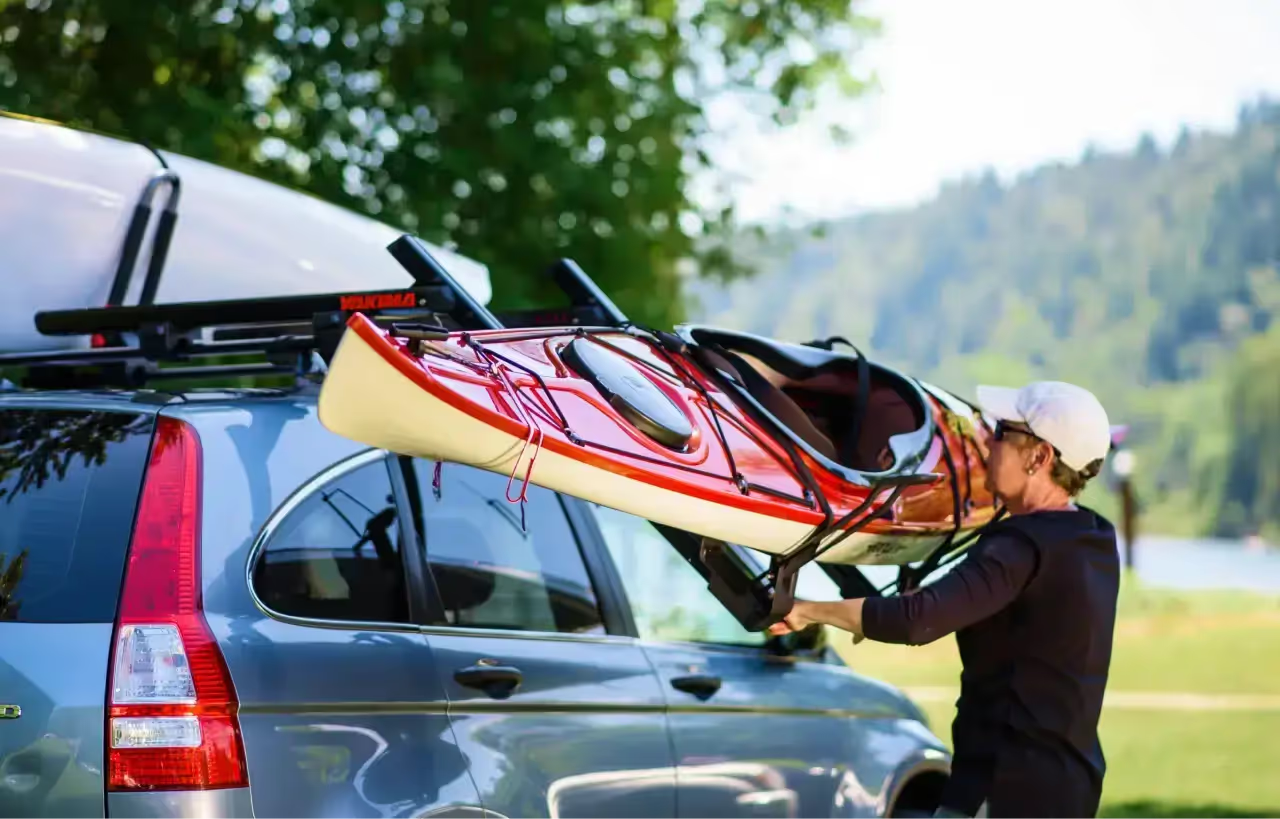
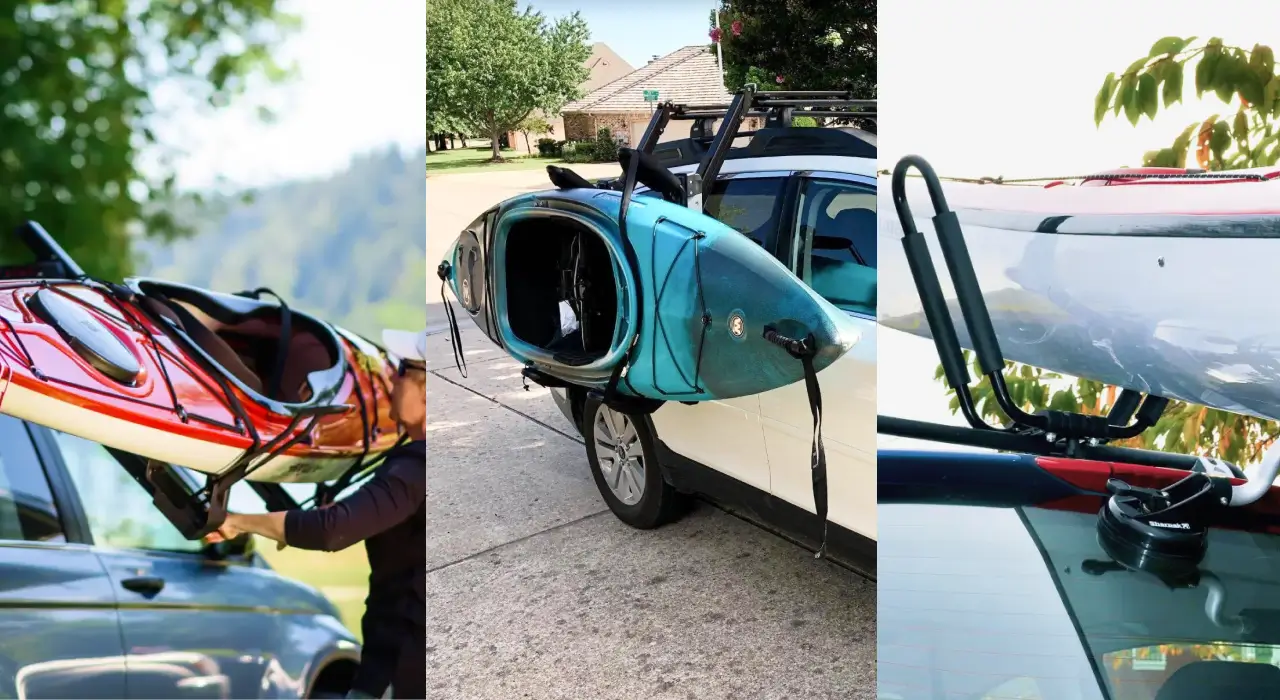
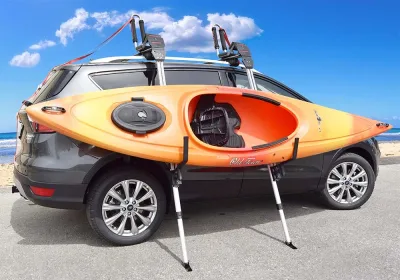
Lift-assist kayak racks are one of the four main types of kayak racks. Lift-assist racks help those who have difficulty lifting kayaks onto their roof.
Disclosure: MyCargoRacks.com is reader-supported. When you buy through links on our site, we may earn an affiliate commission at no extra cost to you. Learn more

Price may vary. Prices and availability are subject to change.
There's a moment that every solo kayaker knows. You're standing in the driveway, staring up at the roof of your SUV, holding one end of a 60-pound kayak, and trying to figure out the physics of getting it up there without dropping it on your head, scratching your paint, or throwing out your back. I've done this dance hundreds of times over my guiding career, and while I've got a loading technique that works, I'd be lying if I said I enjoy the process — especially at the end of a long day on the water when my arms feel like wet noodles.
Lift-assist kayak racks exist to solve exactly this problem, and after testing several models over the years, I can tell you they're one of the most genuinely useful innovations in kayak transport. They're not cheap, and they're not necessary for everyone, but for the paddlers who need them, they're absolute game-changers. Let me walk you through how they work, who they're for, and which ones are worth your money in 2026.
The basic concept is elegant. Instead of lifting your kayak all the way up to the roof — which might be 6 feet off the ground on a tall SUV — a lift-assist rack brings the loading cradle down to you. You load the kayak into the cradle at waist height or slightly above, and then the rack lifts the boat up to the roof using gas-assist struts, similar to the struts that hold your car's hatchback open.
The two main approaches are:
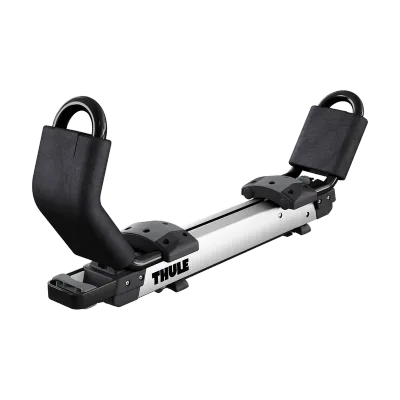
Pivot-arm systems like the Thule Hullavator Pro. These have an arm that swings out from the side of the vehicle and drops down to loading height. You place your kayak in the cradle, then swing the arm back up to the roof position. Gas struts assist the lifting motion, so you're not muscling the full weight of the boat overhead — the struts do most of the work.
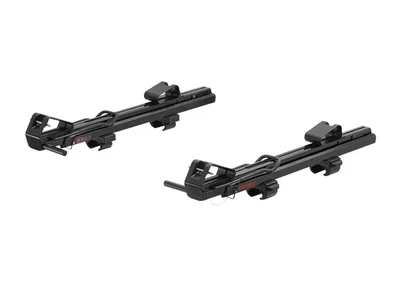
Slide-and-lower systems like the Yakima ShowDown. These have a cradle that slides out laterally from the crossbar and then tilts down to loading height. You load the kayak, push the cradle back up, and slide it back into position over the roof. The sliding mechanism and tilt assist reduce the lifting effort significantly.
Both approaches accomplish the same fundamental goal — getting a heavy kayak from ground level to roof height without requiring you to dead-lift it over your head. The mechanical differences affect loading technique and side clearance requirements, but the end result is the same: your kayak is on the roof and your back doesn't hate you.
I want to be honest here, because lift-assist racks are the most expensive carrier category and I don't think everyone needs one. If you're 6 feet tall, reasonably fit, paddling a 45-pound kayak, and driving a sedan with a low roof, you can load a kayak onto a standard J-rack or saddle carrier without much difficulty. A lift-assist rack would be a convenience, not a necessity.
But there are situations where a lift-assist system goes from "nice to have" to "this is the reason I can still paddle."
Fishing kayaks, touring kayaks, and tandem kayaks can weigh 60-90 pounds. Getting that kind of weight overhead by yourself requires serious strength and a solid technique. If you paddle alone and your boat is on the heavier side, a lift-assist rack removes the most physically demanding part of the whole process. I have a friend who paddles a 78-pound fishing kayak and credits his Hullavator with keeping him on the water — his exact words were "I'd have sold the kayak by now without it."
I have a friend who paddles a 78-pound fishing kayak and credits his Hullavator with keeping him on the water — his exact words were "I'd have sold the kayak by now without it."
Shoulder injuries, back problems, arthritis, limited range of motion — any of these can make overhead loading painful or impossible. Paddling itself might be fine because it uses different muscle groups and different ranges of motion than overhead lifting. A lift-assist rack lets people with upper body limitations continue paddling independently, and that's worth a lot more than the price of the hardware.
If you're 5'4" and driving a Toyota 4Runner, the roof of your vehicle is literally above your head. Loading a kayak onto a standard rack in that situation requires a step stool, a complicated technique, or a very patient helper. A lift-assist rack brings the loading point down to where you can actually reach it comfortably. I've taught paddling courses with students in this exact situation, and a lift-assist rack completely changed their relationship with the sport — they went from needing help every time to being fully independent.
If you're on the water 3-5 times per week — instructors, guides, competitive paddlers, or just obsessed recreational paddlers (no judgment, I've been there) — the cumulative wear and tear of daily overhead loading adds up. A lift-assist rack reduces the physical toll of each loading cycle, which matters when you're doing it 200+ times per year.
The Hullavator Pro has been the benchmark in this category for years, and the current version is genuinely excellent. The gas-assist arms lower the cradle to about 3.5 feet off the ground — roughly hip height for most people — and the lifting action is smooth and controlled. You do need some side clearance because the arm swings outward, so it doesn't work well in tight parking spaces or garages with cars on both sides. But in a normal driveway or parking lot, it's the best loading experience I've ever had with a kayak rack.
Price: around $800-$900 for the complete system.
Weight capacity: 40 lbs per side, 80 lbs total — sufficient for virtually any single kayak.
What I like: Smoothest lifting action, excellent cradle padding, bombproof build quality.
What I don't: Expensive, requires side clearance, and the arm mechanism adds complexity that requires occasional maintenance (lubricate the pivot points once a season).
The ShowDown takes a different approach — instead of swinging an arm out to the side, it slides the cradle laterally and tilts it down. This requires less side clearance than the Hullavator, which is a meaningful advantage in tight spaces. The loading height is slightly higher than the Hullavator — you're loading at about 4 feet instead of 3.5 — but it's still dramatically easier than overhead loading onto a standard rack.
Price: around $580-$650 for the complete system.
Weight capacity: 35 lbs per side.
What I like: Less expensive than the Hullavator, requires less side clearance, simpler mechanism.
What I don't: Slightly higher loading point, lower weight capacity, and the sliding mechanism can stick in cold weather if not lubricated.
Rhino-Rack's entry in this category has been getting better with each revision, and the 2025-2026 version is competitive with the big names. It uses a rear-pivot mechanism that swings the cradle down and back, loading from the rear of the vehicle rather than the side. This is a different loading technique than the Thule or Yakima, and some paddlers prefer it. The price point is more accessible than the Hullavator.
Price: $300-$380 per side.
Weight capacity: 40 lbs per side.
What I like: Good value, solid build, rear-loading approach works well for some vehicle/kayak combinations.
What I don't: Requires clearance behind the vehicle during loading, mechanism is slightly less refined than Thule's.
I get it — spending $650-$900 on a loading system is a tough sell, especially if your kayak cost less than that. Here are some lower-cost alternatives that address the loading problem in different ways.
Roller-assist pads: Several companies make roller pads that mount to your rear crossbar. You lift the bow onto the rollers, then push the kayak forward — the rollers let it slide onto the rack without you having to lift the back end very high. These run $40-$80 and they genuinely help, especially with longer kayaks. They're not in the same league as a gas-assist system, but they reduce the effort by probably 40-50%.
Load-assist bars: A suction-cup or magnetic bar temporarily placed on the rear of your vehicle gives you a pivot point for rear-loading. You rest the bow on the bar, walk the stern around, and slide the boat onto the rack. These are $30-$60 and they work surprisingly well for longer boats.
Hitch-mounted carriers: A hitch carrier loads at bumper height, which solves the overhead problem entirely. If your main issue is lifting height rather than weight, a hitch carrier might be a better solution than a lift-assist roof rack — and it'll cost less too.
The buddy system: Free, effective, and you get to paddle with someone. The obvious downside is that you need a buddy, but if you usually paddle with a partner anyway, having a second person for loading and unloading is the simplest solution of all.
Lift-assist racks are more complex to install than standard carriers. The gas struts, pivot arms, and sliding mechanisms require careful alignment, and the stakes are higher because a poorly installed lift-assist rack could drop your kayak during the lift cycle. Here's what to know before you install.
With a wide variety of lift-assist kayak racks available on the market, it can be difficult to choose the best one for your situation.
We've researched and chosen our top 3 lift-assist kayak racks to help you find the best lift-assist system.
| Product | Type | Capacity | Price | Score |
|---|---|---|---|---|
| Thule Hullavator Pro ★ | Pivot-arm lift-assist | 40 lbs/side (80 lbs total) | $800-$900 | 95/100 |
| Malone Telos XL | Extendable frame lift-assist | 70 lbs | $300-$350 | 86/100 |
| INNO INA453 Kayak Lifter | Side-loading lift-assist | N/A | $270-$300 | 86/100 |
| Yakima ShowDown | Slide-and-lower lift-assist | 35 lbs/side | $580-$650 | 80/100 |
The Hullavator Pro is one of Thule's most notable products.
What's New for 2026:
This lift-assist kayak rack assist up to 40 lbs of the kayak's weight so you can load and unload on your own.
It extends from the crossbars and down the side of the vehicle, allowing you to load the kayak at waist level!
Check out our detailed review of the Hullavator Pro
The Hullavator Pro fits kayaks up to 36 inches wide and 75lbs heavy. The system features dual extending arms that lower the kayak as much as 3 feet. It's made of strong, durable materials and the kayak cradles are heavily padded to keep your kayak safe. The rack also includes bow and stern tie-downs.
People who purchased the Thule Hullavator Pro were very impressed with the lift-assist feature. The system is very easy to use and allows people to enjoy the sport of kayaking when they previously couldn't due to physical limitations.
There aren't many negative points associated with the Hullavator Pro, but there are a few important points to consider before purchasing.
When the rack is attached, it will add an extra 18 inches to your vehicle's clearance. This is important to remember when driving under low structures, such as garages.
Additionally, the Hullavator Pro is only compatible with Thule crossbars. You should verify that the rack fits your vehicle before purchasing.
Overall, the Hullavator Pro by Thule is an outstanding product that has improved the loading and unloading experience for many people's kayaking trips. Its quality and lift-assist technology make the Hullavator Pro our pick for the best lift-assist kayak rack available on the market.
Price may vary.
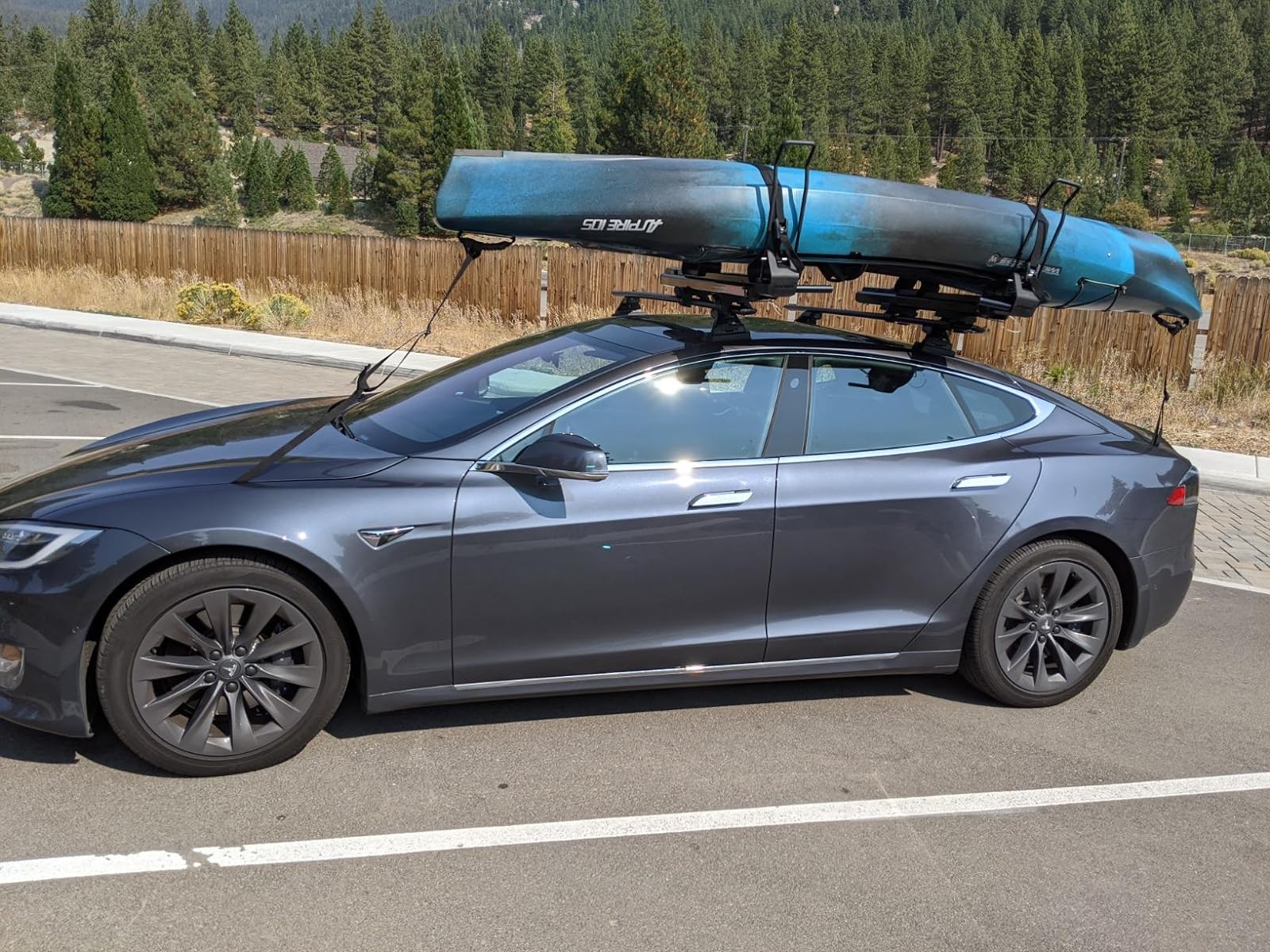
The Yakima ShowDown Load-Assist reduces lift weight by up to 45%, accommodates kayaks, canoes and boards.
What's New for 2026:
Check out our detailed review of the Yakima ShownDown
It folds down to save space, and is easy to install because it requires no additional tools
The tilting mechanism makes easier loading as the design is light.
The ShowDown fits most roof racks and is ideal both for individuals or bigger groups like families.
Despite its high price, its premium offering, robust build, and brand reputation provide good value, making it a suitable investment.
Price may vary.
For loading and unloading, the Thule Hullavator Pro's gas struts provide a significant advantage by allowing the user to load and tie down the kayak at waist level before easily lifting it onto the roof
If ease of installation is a priority, the Yakima ShowDown might be the better choice as it doesn't require any additional tools for installation.
The Sherpak Boat Roller by Seattle Sports is a rear-loading kayak lift assist system that suctions onto your rear window/roof which allows one person to easily load and unload kayaks, canoes, and more.
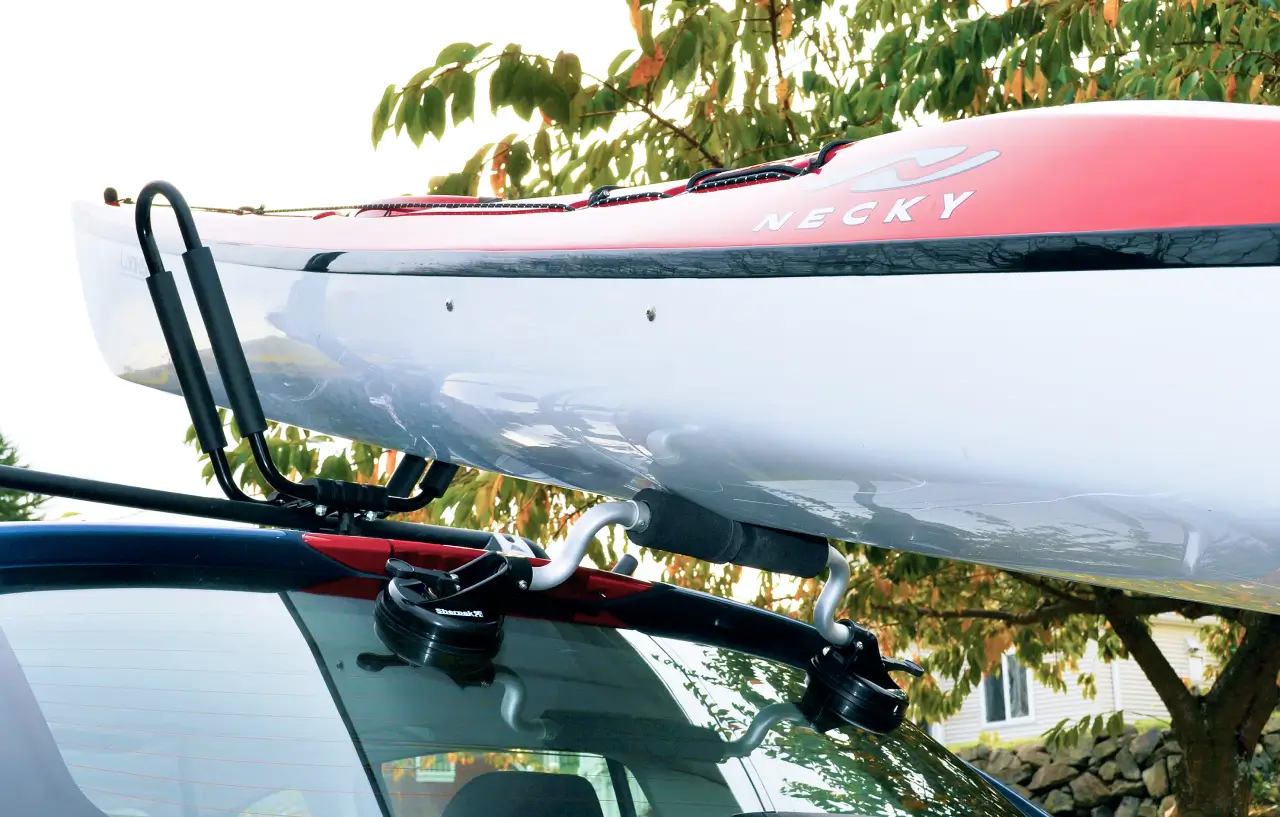
The Sherpak Boat Roller attaches to your car using suction cups. It has a foam roller that you use to slide the kayak onto the roof.
This lift assist system is not something you use while you're driving. Rather, you attach it temporarily to load your kayak then remove it once the kayak is on your roof.
People who purchased the Sherpak Boat Roller were very impressed with the results and highly recommended it. The only major issue people had was using this product with a curved rear window. If you have a curved rear window, the suction cups may not get enough suction to the window.
Overall, the Sherpak Boat Roller is great because it is one of the cheapest lift-assist systems available on the market and it works very well.
The Malone SeaWing/Stinger Load Assist offers easy single-handed kayak loading, reducing the risk of vehicle or kayak damage.
Also, check out our detailed review of Malone SeaWing/Singer
The rack fits a variety of vehicles and has a load capacity of up to 70 lbs.
It features an extendable loading frame, V-style carrier cradles for a secure fit, and corrosion-resistant construction.
.jpeg)
Although installation can be time-consuming, its utility for solo kayakers or small groups, along with its reasonable pricing and decent resale value, highlight its value.
The ease of use post-installation, durability, and protection it provides for both the vehicle and kayak make it a reliable choice
Price may vary.
The TOOENJOY Elevate Universal Lift Assist simplifies the loading and unloading process, adapts to various items and vehicle models, and boasts a durable construction.
This roof top rack accommodates anything from kayaks, canoes, boards, bikes, cargo, ladders and more.
Check out our detailed review of TOOENJOY Lift Assist
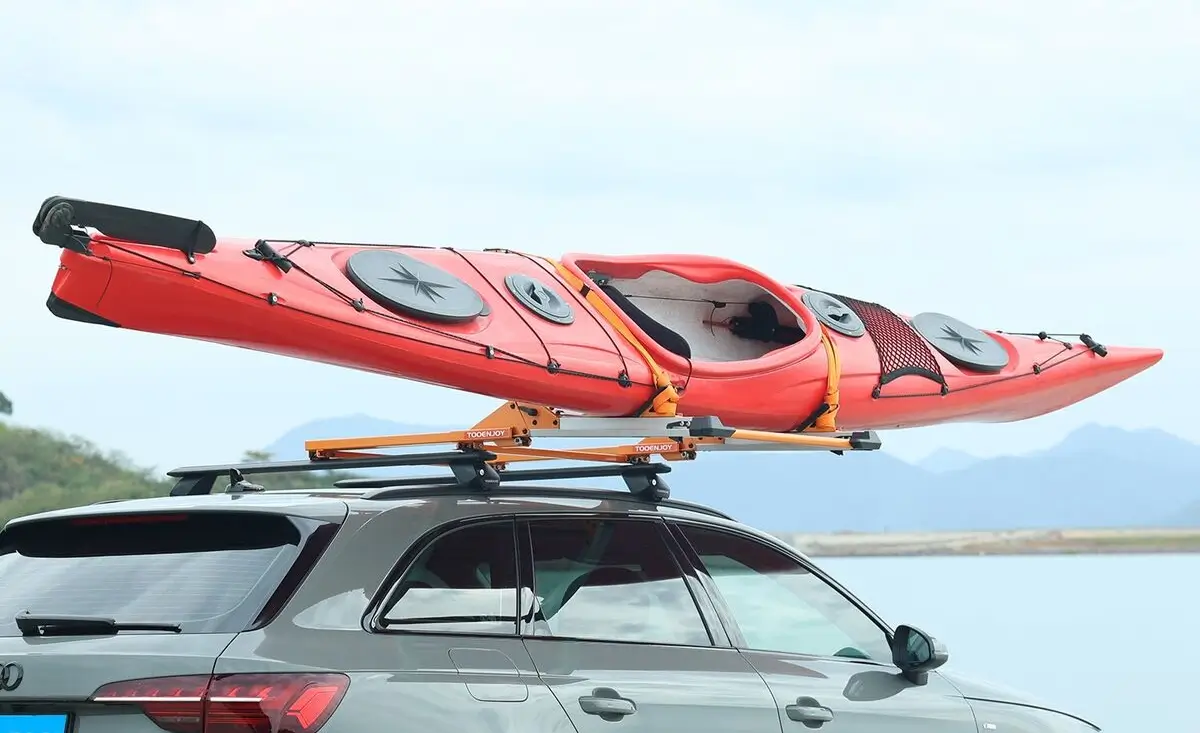
It features an innovative lifting mechanism, adjustable mounting points, and an advanced locking system.
The rack is suitable for a variety of vehicles and has a high weight capacity of 100 lbs.
It's ideal for individuals, couples, and families frequently transporting kayaks, bikes, or other equipment.
Although it's from a lesser-known brand and the initial setup might require some time, its functionality, ease of use post-installation, and competitive pricing compared to market leaders like the Hullavator Pro, make it a promising choice.
The INNO INA453 Kayak Lifter is a kayak lift-assist system that loads from the side of your vehicle.
Check out our detailed review of the INNO INA453
What's New for 2026:
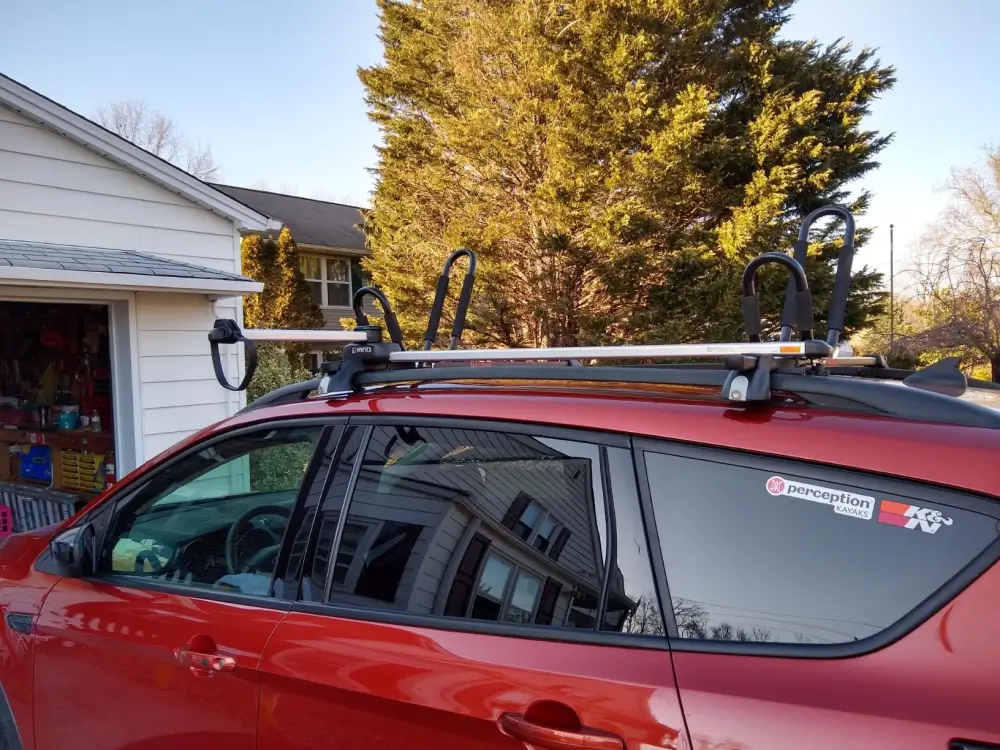
It is more expensive than the Sherpack Boat Roller that we mentioned above, so why might you want a side-loading lift-assist system?
A side-loading lift-asset system will allow you to load your kayak when you may need to park bumper-to-bumper.
Side-loading may not seem like a huge benefit, but if you park your car on the street you may have cars parked behind yours, so you'll need to load from the side. Additionally, if you're unloading your kayak on a road pull-off, parking is often in a "bumper-to-bumper" layout.
Price may vary.
Lift-assist kayak racks are the kind of product that sounds like an expensive luxury until you actually need one — and then it feels like the most important piece of gear you own.
Lift-assist kayak racks are the kind of product that sounds like an expensive luxury until you actually need one — and then it feels like the most important piece of gear you own. If overhead loading is keeping you from paddling as often as you'd like, if you're worried about injuring yourself every time you load your boat, or if you've been relying on a helper and want to be fully independent, a lift-assist system is an investment in your continued ability to get on the water.
Start by honestly assessing whether you need one. If you're loading fine with a standard rack and you're not in pain afterward, save your money. But if loading is the worst part of your paddling experience — and I've heard that from enough paddlers to know it's a common complaint — don't let the sticker price scare you away from a solution that works. Your shoulders, your back, and your relationship with the sport will thank you.
Best Overall Thule Hullavator Pro | Also Great Yakima ShowDown Load-Assist Kayak/SUP Carrier | New 2026 Pick Malone Telos XL Load Assist Module | Also Great INNO INA453 Kayak Lifter | |
|---|---|---|---|---|
| Weight Capacity | 80.0 | 80.0 | 80.0 | 80.0 |
| Weight | 39.7 | 35.0 | 19.0 | 12.0 |
| Length | 36.0 | 42.0 | 58.8 | — |
| Width | 6.0 | 9.0 | 6.0 | — |
| Height | 16.0 | 9.0 | 12.0 | — |
| Material | Aluminum | Steel | Steel | Aluminum |
| Mounting | Roof Crossbar | Roof Crossbar | Roof Crossbar | Roof Crossbar |
| Installation | Basic Tools | Basic Tools | Basic Tools | Basic Tools |
| Noise Rating | Moderate | Moderate | Moderate | Moderate |
| Value Score | 89 | 86 | 86 | 88 |
| Ease of Use | 92 | 84 | 86 | 86 |
| Build Quality | 92 | 87 | 78 | 80 |
| Score | 95/100 | 80/100 | 86/100 | 86/100 |
| Check Price | Check Price | Check Price | Check Price |
Thule Hullavator Pro
Yakima ShowDown Load-Assist Kayak/SUP Carrier
Malone Telos XL Load Assist Module
INNO INA453 Kayak Lifter
Products Mentioned
Related articles
Hand-picked price drops on the racks and carriers we actually recommend. Updated weekly.
Shop today's deals →Newsletter
Get the best rack deals in your inbox
Weekly picks, price drops, and honest reviews. No spam.
Disclosure: MyCargoRacks.com is reader-supported. When you buy through links on our site, we may earn an affiliate commission at no extra cost to you. Learn more