Quick answer
Vertical kayak racks, more commonly called "stackers," are one of the 4 main types of kayak racks. This article provides all the info you'll want to know.
Disclosure: MyCargoRacks.com is reader-supported. When you buy through links on our site, we may earn an affiliate commission at no extra cost to you. Learn more
The first time I tried to haul four kayaks to a river, it was a disaster of epic proportions. We had three vehicles for four boats, a web of ratchet straps that looked like a spider had attacked the parking lot, and we still had to make two trips because one of the kayaks wouldn't fit no matter how creative we got. By the time all four boats were at the put-in, we'd burned an hour and a half and most of our patience. That was the day I started researching high-capacity kayak racks, and it fundamentally changed how I run group trips.
Whether you're a family of paddlers, an outfitter, a camp director, or just someone who's accumulated more kayaks than you ever planned to own — trust me, it happens — figuring out how to transport four or more boats on a single vehicle is one of the best logistical upgrades you can make. I've tested stacker racks, multi-J-rack setups, and trailer systems over years of guiding, and I'm going to walk you through every viable option so you can pick the one that actually works for your situation.
Let me paint a picture that might sound familiar. It's Saturday morning, you've got three friends coming over at 7 AM, and you're supposed to be at the put-in by 9. Everyone has a kayak. Nobody wants to drive separately because gas is expensive and the shuttle logistics get complicated when you have four cars at the take-out. So someone has to carry more than one boat.
This is even more common with families. I know plenty of households that have accumulated a fleet — Dad's fishing kayak, Mom's touring kayak, a tandem for the younger kids, and a whitewater boat for the teenager who just got into the sport. Four boats, one family, one vehicle. Without a high-capacity rack system, you're either making multiple trips or playing an increasingly frustrating game of automotive Tetris.
And then there are the outfitters and instructors. I've spent seasons running beginner courses where I need to haul 4-6 boats to a teaching site every single day. A reliable high-capacity system isn't a luxury in that context — it's the difference between showing up on time and showing up flustered.
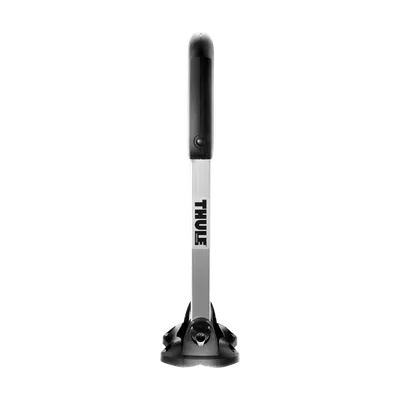
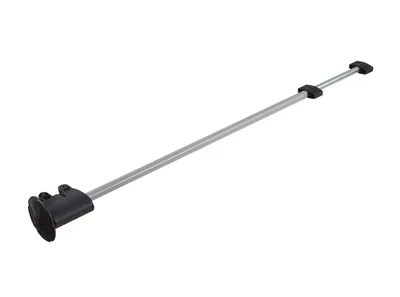
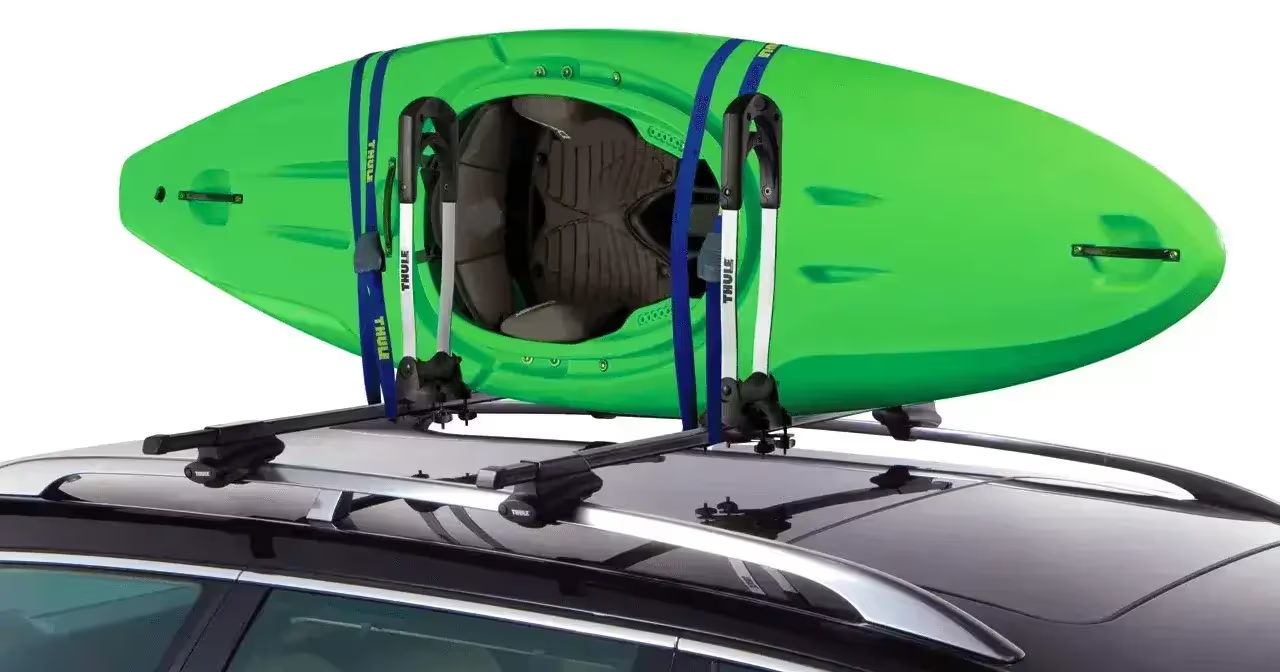
Stacker racks are the most space-efficient way to carry multiple kayaks on your roof. The concept is simple — a vertical post bolts to your crossbar, and you stack kayaks on their sides, leaning against the post, one behind another. A good stacker system can hold 4-6 kayaks depending on their width and your crossbar length.
Each kayak sits on its side with the hull facing the stacker post. You secure each boat with its own strap, and the boats lean against each other for additional stability. It sounds precarious if you haven't seen it in person, but a properly loaded stacker is rock solid. I've driven stacks of four boats at highway speeds through mountain passes without any shifting.
The Thule Stacker remains the gold standard — bombproof construction, clean design, and it holds up to 4 kayaks with ease. The Yakima BoatLoader variant is another excellent option with a slightly different post design that some paddlers prefer. On the budget end, the Malone SaddleUp Pro stacker offers good performance for about half the price of the premium options. For a full price comparison, check out our kayak rack cost guide.
Price may vary.
Price may vary.
"Once you have the right system dialed in — whether that's a stacker on the roof, a combination of J-racks and a hitch carrier, or a dedicated trailer — hauling four boats becomes routine. The whole process takes less time than making coffee."
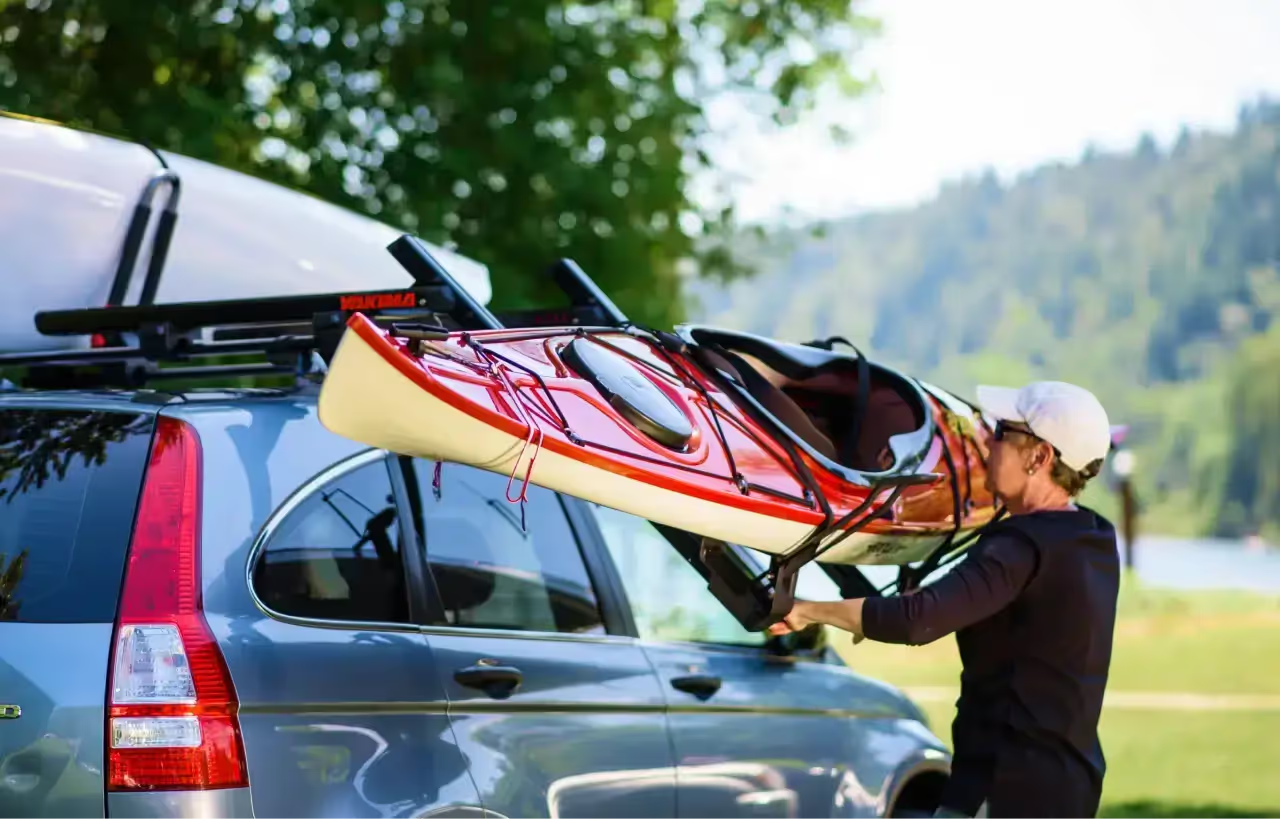
If you've got a wide enough roof and long enough crossbars, you can mount two or even three pairs of J-style carriers side by side. Each J-rack holds one kayak on its side at roughly a 45-degree angle, and with two pairs you've got capacity for two boats. Add a third pair or combine with a stacker, and you're in the 3-4 boat range.
J-racks give each kayak its own independent mounting system. You can load and unload any boat without disturbing the others, which is a big advantage over stackers. The boats are also held more securely individually, since each one is strapped into its own cradle rather than leaning against a shared post.
I ran a double J-rack setup on my Tacoma for about three seasons, carrying two boats to after-work sessions on the local creek. It was bulletproof. Loading was easy because each boat went into its own cradle, and I never worried about one boat shifting and affecting the other.
Roof width. Most passenger vehicles can fit two pairs of J-racks comfortably, which gives you two-boat capacity. To fit three or four pairs, you need a wider roof — think full-size SUVs, vans, or trucks with bed-mounted crossbar systems. For most people, a double J-rack setup maxes out at two kayaks, and you'll need to combine it with another method to reach four.
This is where things get interesting for the four-boat crowd. Several manufacturers now make hitch-mounted carriers that hold 2-4 kayaks at bumper height, completely independent of your roof. Combine a hitch carrier with a roof system and you can potentially transport 4-6 boats on a single vehicle.
The hitch rack guide covers the general category in detail, but for high-capacity purposes, the key advantage is that you're distributing the load between two mounting points — your roof and your hitch — instead of putting everything on the roof. This is easier on your vehicle, better for weight distribution, and gives you more total capacity.
When you regularly need to haul more than 4 boats, a dedicated kayak trailer starts making a lot of sense. I resisted this for years because trailers felt like overkill, but after I started running larger group trips, I came around completely.
A purpose-built kayak trailer carries 4-8 boats at a height that's easy to load, keeps all the weight off your vehicle's roof, and eliminates the capacity constraints of rack-based systems entirely. You can load and unload boats from either side, you don't have to worry about stacking order, and the boats ride low and stable. For outfitters and instructors, a trailer is virtually a requirement.
I use a 6-boat trailer for my guided trips now, and the time savings alone have justified the cost. What used to take 45 minutes of loading and strapping now takes 15 minutes. That's an extra half hour of paddling on every trip.
For most paddlers who need four-boat capacity but aren't running a commercial operation, the sweet spot is a combination approach. Here's what I recommend based on the setups I've tested and the feedback I've gotten from hundreds of students over the years.
For occasional four-boat trips: Two J-racks on the roof plus a hitch carrier for the other two boats. Total investment is roughly $400-$700, and you can remove the hitch carrier when you don't need it.
For regular four-boat trips: A stacker rack system on the roof. It's the most space-efficient single-system solution, and once you get your loading technique dialed, it's faster than you'd think. Budget around $200-$400.
For 5+ boats or commercial use: A trailer. There's just no practical way to consistently carry more than four boats on a passenger vehicle's roof without compromising safety or sanity.
Here's something critical that a lot of paddlers overlook. Your vehicle's roof has a dynamic weight rating — the maximum weight it can carry while driving. For most sedans, that's 100-165 pounds. For most SUVs, it's 150-200 pounds. Four kayaks can easily weigh 150-250 pounds total, and that's before you add the weight of the rack system itself.
Always check your vehicle's roof weight rating before loading four boats up there. It's in your owner's manual, and exceeding it risks damaging your roof, voiding your warranty, and creating a genuinely dangerous driving situation. This is one of the reasons I like the combination approach — splitting the load between roof and hitch keeps you within the weight limits on both.
More boats means more straps, and more straps means more opportunities for something to go wrong. Here are my rules for multi-boat tie-downs, developed through years of hauling boats to put-ins in every kind of weather.
Hauling four kayaks sounds like a logistical headache, and the first time you try it, it probably will be. But once you have the right system dialed in — whether that's a stacker on the roof, a combination of J-racks and a hitch carrier, or a dedicated trailer — it becomes routine. I load four boats for group trips without thinking about it now, and the whole process takes less time than making coffee.
The key is matching the system to your actual use case. Don't buy a trailer if you only need four-boat capacity twice a year, and don't try to make a double J-rack setup work if you're hauling boats every weekend for an outfitting business. Figure out your frequency, your boat count, your budget, and your vehicle's limitations, and the right answer will be obvious. Then stop worrying about the gear and go paddle — that's the whole point of having racks in the first place.
| Product | Brand | Score |
|---|---|---|
| Thule Stacker | Thule | 89/100 |
| Yakima BoatLoader EVO | Yakima | 89/100 |
Products Mentioned
Related articles
Hand-picked price drops on the racks and carriers we actually recommend. Updated weekly.
Shop today's deals →Newsletter
Get the best rack deals in your inbox
Weekly picks, price drops, and honest reviews. No spam.
Disclosure: MyCargoRacks.com is reader-supported. When you buy through links on our site, we may earn an affiliate commission at no extra cost to you. Learn more