
Quick answer
Every type of kayak rack has advantages and disadvantages, so it's important to know about the different styles before purchasing one.
Disclosure: MyCargoRacks.com is reader-supported. When you buy through links on our site, we may earn an affiliate commission at no extra cost to you. Learn more
When I first started guiding whitewater trips, I had one kayak and one rack — a beat-up J-rack I bought used from a fellow instructor. It worked fine. Fast forward a few years, and I had four boats, three different rack systems, and a garage that looked like a kayak shop exploded in it. The gear accumulation was gradual, but the lesson was clear: there's no single "best" kayak rack. There's only the best rack for your kayak, your vehicle, and your paddling style.
The kayak rack market breaks down into four main categories, and understanding what each one does — and where each one falls short — is the difference between a setup you love and a setup you fight with every weekend. I've used all four types extensively over more than a decade of professional paddling, and I'm going to give you the straight, experience-based rundown on each one so you can make a smart decision without buying the wrong thing first.
Before we dive into details, here's the quick overview. Kayak racks and carriers fall into four main categories:
Each one has distinct advantages, and the right choice depends on your kayak type, vehicle, budget, and how you paddle. Let's break them down.
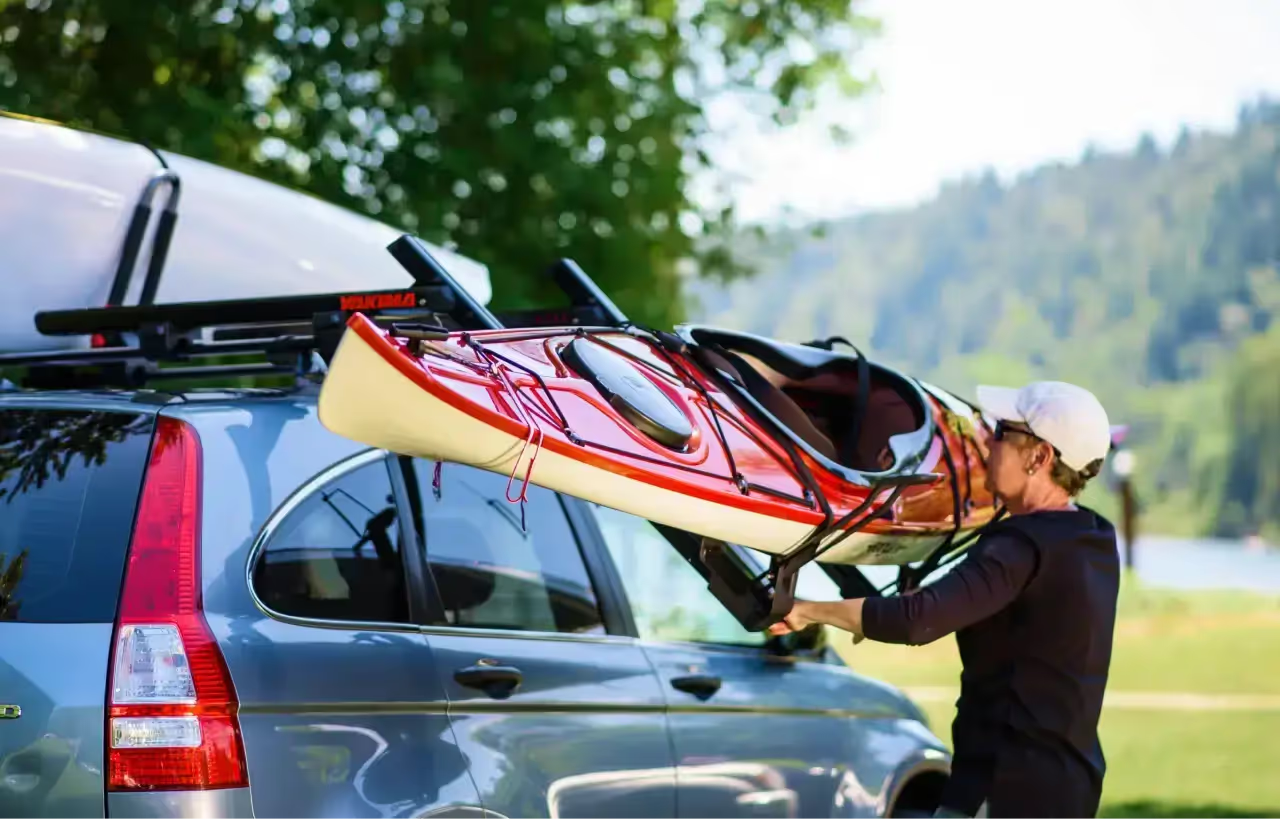
J-racks are the most popular kayak carrier on the market, and for good reason. The J-shaped cradle holds your kayak on its side at roughly a 45-degree angle, using significantly less roof space than a flat carrier. This is the rack that made rooftop kayak transport accessible and affordable for everyday paddlers.
Two J-shaped cradles mount to your crossbars — one on the front bar and one on the rear. You tilt the kayak onto its side and nestle it into the cradles, then strap it down. The angled position means the kayak's footprint on your roof is much narrower than its actual beam, leaving room for a second kayak, a cargo box, or other accessories.
Paddlers who want to maximize roof space, carry two boats, or keep costs down. J-racks are the default choice for most recreational and whitewater kayakers. Read our full J-rack guide for detailed reviews and loading techniques.
Saddle racks hold your kayak flat — right-side up in its natural orientation — supported by four padded cradles. They're the stability champions of the kayak rack world, and they're my personal preference for long highway drives and expensive composite kayaks.
Four contoured saddle pads mount to your crossbars, two per bar. The kayak sits hull-down in the saddles, and straps secure it from above. The cradles distribute the kayak's weight across a wide contact area, reducing pressure points and providing excellent support.
Paddlers with wide kayaks, sit-on-top boats, fishing kayaks, or composite hulls they want to protect. Also great for anyone who prioritizes maximum stability and does a lot of highway driving. Read our full saddle rack guide for top picks and detailed comparisons.
"The right rack makes the difference between a paddling season full of easy, stress-free trips and a season full of loading frustrations, highway anxiety, and excuses not to go."
Stackers are the high-capacity solution for carrying multiple kayaks on a single vehicle. A vertical post mounts to your crossbar, and you stack kayaks on their sides against the post, one behind another. A single stacker system can hold 4-6 kayaks depending on their width.
A vertical post — usually padded steel or aluminum — bolts to your crossbar. Kayaks stand on edge against the post, leaning on each other, and each one is individually strapped. The loading order is sequential — first kayak goes against the post, each subsequent kayak leans against the previous one.
Families, outfitters, paddling clubs, and anyone who regularly transports 3+ kayaks. If you're hauling boats for a group, a stacker is the most practical and affordable solution. Read our high-capacity rack guide for a deep dive into multi-boat transport options.
Hitch carriers attach to your vehicle's trailer hitch receiver instead of the roof. The kayak rides behind the vehicle at bumper height, completely independent of your roof and crossbar system. This is the most fundamentally different category because it changes where the kayak sits, not just how it's held.
A vertical post, horizontal arm, or T-bar slides into your 2-inch hitch receiver and is secured with a hitch pin. The kayak attaches to the carrier via straps, cradles, or mounting arms and rides behind the vehicle. Some designs hold the kayak vertically, some horizontally, and some at an angle.
Solo paddlers who struggle with overhead loading, tall vehicles where roof loading is difficult, vehicles without suitable roofs for crossbar mounting, and anyone who wants to keep their roof free. Read our hitch carrier guide for detailed reviews and comparisons.
After recommending racks to hundreds of paddlers over the years, I've developed a set of questions that consistently leads people to the right choice. Walk through these honestly and the answer usually becomes obvious.
One kayak: Any type works. Your choice should be based on other factors below.
Two kayaks: A pair of J-racks is the most popular and affordable solution. Two saddle systems can work if your roof is wide enough. A J-rack on the roof plus a hitch carrier is another great combo.
Three or more: A stacker rack, or a combination of roof carriers and a hitch carrier. For 4+ boats regularly, consider a trailer.
Narrow whitewater or touring kayak: J-racks are perfect. These boats are designed to sit on their side and they fit J-cradles beautifully.
Wide recreational or fishing kayak: Saddle racks provide better support for wider, flat-bottomed hulls. J-racks work too, but saddles are the better fit.
Sit-on-top kayak: Saddle racks. The hull shape of most sit-on-tops doesn't sit well in J-racks due to scupper holes and irregular bottom contours.
Canoe: Hitch carriers or roof-mounted with specific canoe saddles. Canoes are wider than kayaks and need wider-spaced contact points.
Vehicle with factory crossbars: Any roof-mounted system will work. You just need the carrier itself.
Vehicle without crossbars: You'll need to buy crossbars ($150-$400) plus a fit kit ($40-$100) for any roof-mounted system. Alternatively, a hitch carrier skips the crossbar requirement entirely.
Tall truck or SUV: Consider a hitch carrier or a lift-assist rack to avoid difficult overhead loading.
Jeep or vehicle with unusual roof: Check out our Jeep-specific guide for special considerations around soft tops, hard tops, and weight limits.
Under $150: A basic J-rack or budget saddle system. This gets you on the road safely.
$150-$300: A quality J-rack or saddle system from a major brand, with good padding and refined features.
$300-$500: A hitch carrier, a premium roof system, or a stacker for multiple boats.
$500+: A lift-assist system or a premium combination setup (crossbars + carrier + accessories).
This is the question nobody wants to ask themselves, but it matters. If overhead loading is painful, scary, or impossible — whether due to the vehicle's height, the kayak's weight, or your own physical situation — a hitch carrier or lift-assist rack removes that barrier entirely. There's no shame in choosing the option that keeps you paddling safely and independently.
Technically, yes. Foam blocks, pool noodles, and ratchet straps can get a kayak home from the store in a pinch. I've done it. Most paddlers have done it at least once. But I don't recommend it as a regular transport method. Foam blocks can shift, they don't distribute weight well, they can damage your roof over time, and the kayak is significantly less secure than it would be in a purpose-built carrier.
If you're in a situation where you need to transport a kayak or canoe without a rack — maybe you're borrowing a boat or you just bought one and the rack hasn't arrived yet — our guide to tying a canoe without a rack covers the safest techniques. But please treat it as a temporary solution, not a permanent one.
Kayak racks aren't the exciting part of paddling. Nobody daydreams about crossbar compatibility or strap tensioning techniques. But the right rack makes the difference between a paddling season full of easy, stress-free trips and a season full of loading frustrations, highway anxiety, and excuses not to go. I've seen too many paddlers let a bad transport setup keep them off the water, and that's a problem worth solving.
Start with the decision framework above. Be honest about your kayak, your vehicle, your body, and your budget. Pick the rack type that fits your actual situation, not the one that looks coolest or costs the least. Then buy once, mount it up, learn to use it, and go paddle. That's the whole point — every minute you spend thinking about racks is a minute you're not spending on the water, and the water is where the good stuff happens.
Related articles
Hand-picked price drops on the racks and carriers we actually recommend. Updated weekly.
Shop today's deals →Newsletter
Get the best rack deals in your inbox
Weekly picks, price drops, and honest reviews. No spam.
Disclosure: MyCargoRacks.com is reader-supported. When you buy through links on our site, we may earn an affiliate commission at no extra cost to you. Learn more