How Much Do Bike Racks Cost? Price Tag Breakdown
When someone asked me "how much does a bike rack cost?" during my time at REI, my honest answer was always "anywhere from $40 to $800, and the right amount to spend depends on questions you probably haven't thought about yet." That's not a satisfying answer when you're standing in an aisle with a credit card, but it's the truthful one.
The bike rack market in 2026 has a wider price range than ever, mostly because e-bikes have pushed the top end higher while budget brands have driven the bottom end lower. This guide breaks down what you actually get at every price point, the hidden costs people forget about, and how to decide whether spending more is worth it for your specific situation.
Price Ranges by Rack Type
Let's start with the straightforward numbers. These are typical 2026 retail prices for racks from established brands (Thule, Yakima, Kuat, Saris, Allen Sports, Hollywood Racks).
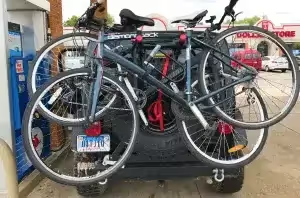
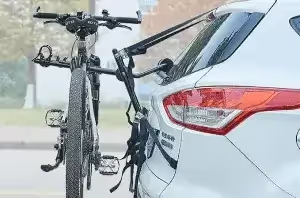
Trunk-Mount Racks: $40–$260
- $40–$80: Basic two-bike racks from Allen Sports and similar brands. Steel frames, foam padding, hook-and-strap mounting. They work for light, occasional use. Expect thinner padding, fewer anti-sway features, and more bike-to-bike contact.
- $80–$150: Mid-range options with better padding, more secure strap systems, and improved vehicle compatibility. The Thule Gateway series lives here.
- $150–$260: Premium trunk racks like the Saris Bones. Superior paint protection, ratcheting straps, three-bike capacity options. This is the ceiling — spending more than $260 on a trunk rack rarely makes sense when hitch racks start in the same range.
For specific model recommendations at each tier, see our best trunk-mount racks guide.
Vertical/Hanging Hitch Racks: $80–$350
- $80–$150: Budget hanging racks. Allen Sports, Hollywood Racks. Two-bike capacity, basic anti-sway cradles, no tilt feature. Functional and no-frills.
- $150–$250: The quality sweet spot. Thule Camber, Yakima RidgeBack. Better cradles, tilt-down access, tool-free installation, fits multiple receiver sizes.
- $250–$350: Four-bike models and premium lightweight options like the Kuat Transfer V2. This is where you go for family hauling or if lightweight installation ease is a priority.
Our vertical hitch rack buyer's guide compares the best models in each price bracket.
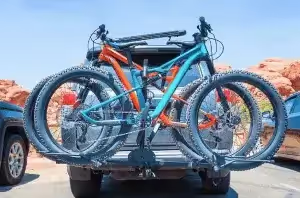
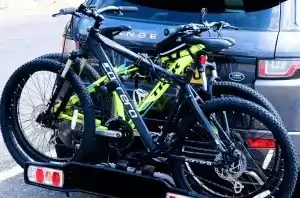
Platform Hitch Racks: $250–$800+
- $250–$400: Entry-level platform racks. Two-bike capacity, basic tilt feature, 35–45 pound per-bike capacity. Often heavy themselves (50+ pounds), which is a tradeoff at this price. Good for standard bikes but marginal for heavy e-bikes.
- $400–$600: The mainstream quality range. Kuat Sherpa 2.0, Thule EasyFold XT, Yakima OnRamp. Better build quality, integrated cable locks, e-bike-rated capacity (up to 60 pounds per bike), lighter rack weight through aluminum construction.
- $600–$800+: Premium tier. 1Up USA, Kuat NV 2.0 (now the NV Base 2.0). Overbuilt construction, add-on extensions for more bikes, tool-free everything, best anti-theft features, longest warranties. If you're using a rack multiple times per week for years, this tier pays for itself in durability.
Roof-Mount Racks: $100–$350 (Plus Crossbar Costs)
- $100–$180: Fork-mount designs where you remove the front wheel. Cheaper, lower profile on the roof, but the wheel-removal step is a deal-breaker for many people.
- $180–$350: Upright designs that hold the bike with both wheels on. Thule UpRide, Yakima HighRoad. More convenient but taller profile on the roof.
- Hidden cost — crossbars: If your vehicle doesn't already have roof crossbars, add $200–$500 for a crossbar system. This makes roof racks the most expensive option for vehicles that aren't already equipped.
Spare-Tire Racks: $80–$400
- $80–$150: Strap-on designs for occasional use on paved roads.
- $200–$300: Bolt-through designs like the Yakima SpareRide. The mainstream choice for Jeep owners.
- $300–$400: Heavy-duty models for oversized tires (Kuat Highline). Premium construction for off-road use.
See our spare-tire rack guide for Jeep-specific recommendations.
Truck Bed Racks: $50–$300
- $50–$100: Simple fork-mount blocks that bolt or clamp to the bed. Front wheel off, fork secured.
- $100–$200: Bed rail clamp systems with integrated tie-downs. More versatile than fork-mounts.
- $200–$300: Over-the-bed bar systems with multiple bike positions. Keep bed space usable underneath.
Hidden Costs People Forget
The price on the box is never the full story. Here's what else you might need to budget for:
Hitch Receiver Installation: $150–$400
If you choose a hitch-mount rack but your vehicle doesn't have a hitch receiver, you'll need one installed. Parts typically cost $100–$200 depending on the vehicle. Professional installation adds $50–$200. Some DIY-friendly models can be self-installed in an afternoon with basic tools. Even with the installation cost, a hitch rack is often a better long-term investment than a trunk rack that damages your paint.
Locking Hitch Pin: $15–$40
Most hitch racks include a basic pin and clip. A locking pin prevents someone from pulling the pin and stealing your rack (and bikes) from the receiver. It's a small purchase I'd call essential.
Frame Adapter Bars: $30–$60
Step-through bikes, some women's bikes, and full-suspension mountain bikes with unusual frame geometry don't hang well on vertical racks. An adapter bar creates a temporary "top tube" for hanging. You might need one per bike.
Replacement Straps and Pads: $10–$30
Trunk rack pads compress and straps wear out. Budget for replacements every 1–2 seasons of regular use.
Paint Protection Film: $30–$80
If you're using a trunk rack, applying clear paint protection film to the contact areas on your vehicle is the smartest $30 you'll spend. Far cheaper than touch-up paint or a respray. Learn more about paint protection in our bike rack damage prevention guide.
Bike Locks for the Rack: $25–$60
Most racks secure bikes to the rack, but not with a lock. A cable lock or U-lock that runs through the bikes and rack frame is necessary anywhere you'd leave bikes unattended. Some premium racks include integrated lock cables — one of the perks of spending more upfront.
The E-Bike Premium: Why Your Rack Budget Just Went Up
In 2026, the single biggest factor inflating bike rack prices is e-bike compatibility. E-bikes weigh 45–65 pounds each — some cargo e-bikes hit 75 pounds. Most racks under $300 can't safely handle that weight. If you own or plan to buy e-bikes, your realistic rack budget starts at $350 and a comfortable one is $500–$600.
This stings, but the engineering reality is that carrying 120+ pounds of bikes (two e-bikes) requires heavier-duty materials, stronger tray supports, and beefier hitch connections. Those cost more to manufacture. Skimping here isn't just uncomfortable — it's unsafe.
Buying Used: When It's Smart and When It's Not
Used bike racks are widely available on Facebook Marketplace, Craigslist, and occasionally at REI's used gear sales. Here's my honest take:
Buy Used If:
- It's a platform hitch rack from a major brand (Thule, Yakima, Kuat, 1Up). These are built like tanks and hold up well over years of use. Inspect the tray for cracks and the hitch assembly for wear.
- It's less than 5 years old. Older racks may not accommodate modern bike designs (wider tires, different thru-axle standards).
- You can inspect it in person and test all moving parts — tilt mechanism, locking mechanisms, arm adjustments.
Don't Buy Used If:
- It's a trunk rack. The straps and padding are consumable parts, and you can't easily assess their remaining life. A $40 new Allen Sports rack is safer than a $25 used trunk rack with stretched straps.
- The brand is unknown or discontinued. Replacement parts and customer support matter when something breaks.
- It's been in a collision or rear-end accident. Even minor impacts can bend hitch assemblies and tray supports in ways that aren't visible but compromise the rack's structural integrity.
Seasonal Deals: When to Buy
Bike rack prices follow a predictable seasonal pattern:
- Best prices: October through February. Retailers clear cycling inventory for winter/holiday stock. Black Friday and end-of-season sales can knock 20–30% off major brands.
- Worst prices: April through July. Peak cycling season means peak demand and few discounts.
- REI Anniversary Sale (May) and member dividend: If you're an REI member, the annual dividend plus sale pricing can stack for meaningful savings. I saw customers save 25%+ on Thule and Yakima racks during the Anniversary Sale.
- Amazon Prime Day (typically July): Hit or miss on bike racks specifically, but Allen Sports and some mid-range brands often appear in deals.
The "right" amount to spend on a bike rack depends on three things: what type of rack your vehicle needs, how heavy your bikes are, and how often you ride. A twice-a-year recreational cyclist with standard bikes can spend $60–$150 and be perfectly well served. A weekly rider with e-bikes needs to budget $400–$600 for a rack that's safe and durable. The largest hidden cost is buying the wrong rack first and then buying the right one — I watched that happen constantly at REI.
Take the time to identify your rack type first, then shop within that category's price range with realistic expectations. And if you're on the fence between a cheaper option and a better one, ask yourself: "Will I upgrade within two years?" If the answer is probably yes, buy the better rack now. You'll spend less in the long run.