Best Trunk-Mount Bike Racks for 2026
Trunk-mount bike racks are the entry point for most cyclists, and they're also the product category where I processed the most returns during my time at REI. That's not because trunk racks are bad — some of them are genuinely well-made. It's because people buy them without understanding the tradeoffs, and then they're surprised when the hooks scratch their paint, the straps loosen on the highway, or the rack doesn't actually fit their hatchback's curved rear window.
I want to help you skip the frustration. This guide covers the best trunk-mount racks available in 2026, with a focus on what actually matters: paint protection, stability at speed, vehicle compatibility, and whether the money you save over a hitch rack is worth the compromises you're making.
How Trunk-Mount Racks Work (And Why They're Tricky)
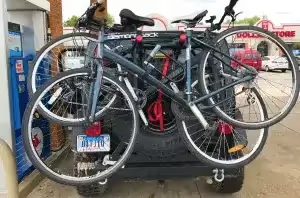
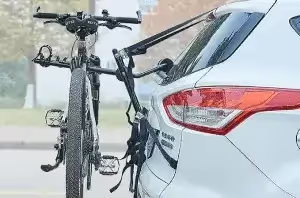
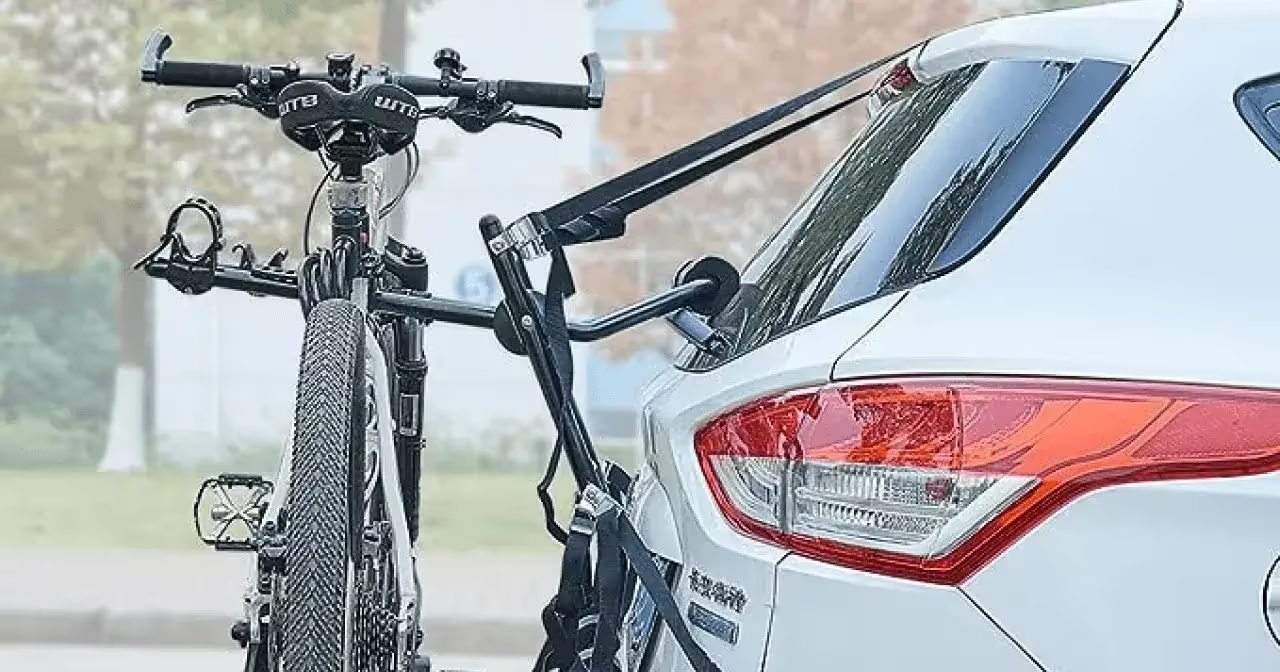
A trunk-mount rack uses hooks and straps to attach to your vehicle's trunk lid, hatchback, or rear hatch. Metal hooks grab the edge of the trunk opening, and adjustable straps pull the rack tight against the vehicle's body. Your bikes then hang from arms that extend out from the rack frame, similar to vertical hitch racks.
The challenge is that this system relies entirely on compression and friction against your car's painted surfaces. There's no bolt, no receiver, no mechanical lock — just straps pulled tight against sheet metal. Every trunk, hatchback, and SUV rear end has a different shape, different edge profiles, and different paint quality. This is why fit varies so dramatically from vehicle to vehicle, and why "universal fit" is the most misleading phrase in the bike rack industry.
The Paint Problem
Every trunk rack sits against your car's paint. The contact points are padded — usually with foam or rubber — but over time, vibration, road grit trapped under the pads, and simple compression can dull, scratch, or chip your paint. I saw this damage on customer cars routinely. The severity depends on three things:
- Pad quality: Dense rubber pads protect better than cheap foam. Foam compresses, shifts, and lets grit work its way underneath.
- How often you leave the rack on: Removing the rack after each use dramatically reduces paint damage risk. Leaving it on for weeks — especially through rain and road salt — accelerates wear.
- Your paint's hardness: Some factory paint is more scratch-resistant than others. Clear bra / paint protection film in the contact areas is the best insurance if you use a trunk rack regularly.
For a complete look at how different rack types affect your car, see our guide to bike rack damage prevention.
Who Should Buy a Trunk-Mount Rack in 2026
With hitch racks getting more affordable every year, the case for trunk racks has narrowed — but it hasn't disappeared. You should consider a trunk rack if:
- You don't have a hitch receiver and don't want to install one ($150–$400 for a hitch installation)
- You rent your vehicle or drive a lease and can't modify it
- You need an occasional-use, light-duty solution for a few trips per year
- Your budget is genuinely limited to under $150
- You drive a sedan or compact car without a viable hitch option
If you ride weekly, carry heavy bikes, or want a set-it-and-forget-it rack, skip the trunk mount. A hitch-mounted rack — even a budget one — will serve you better long-term.
Top Trunk-Mount Bike Racks for 2026
Best Overall: Saris Bones 2-Bike
The Saris Bones has been the trunk rack I recommend most often, and the current version hasn't given me a reason to stop. The injection-molded arms and arc-based design mean no metal parts touch your car — the entire frame is a ratcheting molded body with rubber contact pads. This is the most paint-friendly trunk rack design on the market.
What I like: The Bones fits a legitimately wide range of vehicles because the arms adjust to multiple positions, accommodating different trunk angles. The rubber feet are the grippiest I've tested. And the ratcheting strap system is far more secure than the basic hook-and-cinch design on cheaper racks. Vehicle fit list is extensive — check Saris's fit guide online before buying.
What to know: At $180–$220, it's the most expensive trunk rack on this list. Some people balk at paying that much for a strap-on rack when entry-level hitch racks exist in the same range. That's a fair point — but if you've decided on a trunk mount, this is the one that minimizes the downsides. Capacity is two bikes up to 35 pounds each.
Best Budget Pick: Allen Sports Deluxe 2-Bike (Model 102DN)
The Allen 102DN is the best-selling trunk rack in America for a reason: it costs around $50–$65 and it works. Six straps, three sets of hooks, padded lower frame, two hanging arms. It's been essentially the same design for years because the formula is solid for what it is.
What I like: If you need to transport two bikes to the lake house twice a summer, spending $50 instead of $200 is the right call. I sold these to college students, seasonal riders, and people who just needed something that worked now without overthinking it.
What to know: The foam padding is thin and compresses quickly. The hooks can scratch your trunk edge if they shift — and they will shift if you don't check the straps before every drive. This is a "check every time, remove after every use" product. It's not a "leave it on all summer" product. For a detailed look at what different price points get you, see our bike rack cost breakdown.
Best for Three Bikes: Saris Bones EX 3-Bike
Carrying three bikes on a trunk rack pushes the limits of what these systems should do, but the Saris Bones EX 3 handles it better than anything else in the category. Same great frame design as the standard Bones, with a third arm position and a 105-pound total capacity (35 pounds per bike).
What I like: The arm spacing is well-designed to keep three bikes from crashing into each other. The wider base provides more stability than competing three-bike trunk racks. The strap system feels confident even with the full load.
What to know: Three bikes on a trunk rack is a lot of leverage on those straps. Check them obsessively. Also, loading order matters — heaviest bike closest to the car, lightest on the outside. Price runs $220–$260.
Best for Hatchbacks and SUVs: Thule Gateway Pro 2
Hatchbacks and SUVs have a more vertical rear surface than sedans, which changes how trunk racks sit. The Thule Gateway Pro 2 has an adjustable foot position that lets you dial in the angle for near-vertical rear gates. It also has Thule's FitDial system, which provides vehicle-specific strap routing instructions — a small touch that eliminates a lot of guesswork.
What I like: The six-strap system (instead of the standard four on many racks) adds real stability on hatchbacks where the contact area is smaller. Cradle arms have soft rubber padding with decent anti-sway properties.
What to know: At $170–$200, it's priced near the Saris Bones. Choosing between them often comes down to your specific vehicle — check both fit guides. The Gateway Pro handles vertical rear surfaces better; the Bones handles traditional sedan trunks better.
Trunk Rack Installation: What I Learned from Watching Hundreds of Setups
Here are the mistakes I saw most often in the REI parking lot:
- "I'll tighten it later" — No. Tighten every strap fully during installation. A slightly loose trunk rack at 20 mph becomes a dangerously loose rack at 60 mph. Wind load increases exponentially with speed.
- Hooks on bare paint edges — The hooks should grab the lip of the trunk opening where there's a folded metal edge, not flat painted surfaces. If your vehicle doesn't have a defined lip, the hooks will slide and scratch.
- Ignoring the bottom straps — Many trunk racks have bottom straps that anchor to the underside of the trunk or bumper. People skip these because they're awkward to reach. Don't skip them — they prevent the rack from swinging side to side.
- Loading bikes before fully securing the rack — Always secure the rack to the car first, then load bikes. Loading a 30-pound bike onto an unsecured rack is how racks fall off cars in parking lots.
The Return Pattern That Tells You Everything
At REI, trunk racks came back for three reasons more than any others:
- "It doesn't fit my car" — always check the manufacturer's vehicle fit guide, not just the "universal fit" claim on the box
- "It scratched my paint" — usually from leaving the rack on too long or from hook contact on flat surfaces
- "My bikes kept hitting each other" — the inherent downside of hanging-arm designs, especially with more than two bikes
None of these are surprises if you buy with realistic expectations. A trunk rack is a compromise product — it's affordable and requires no vehicle modification, but it demands more attention and care than a hitch rack. If you go in knowing that, you'll be satisfied with the purchase.
The Saris Bones 2-Bike is the trunk rack I'd put on my own car. The paint protection, the strap security, and the build quality justify the price premium over budget options. If your budget is truly tight, the Allen Sports 102DN does the job for casual, infrequent use — just treat it as a "check every strap before every drive" product.
Trunk racks serve a real purpose for renters, lease drivers, occasional riders, and budget-conscious families. But they're not a long-term solution for regular cyclists. If you find yourself loading and unloading a trunk rack every weekend, it's time to invest in a hitch receiver and a proper hitch rack. Browse our complete guide to all five bike rack types to see the full picture and find the setup that matches how you actually ride.